
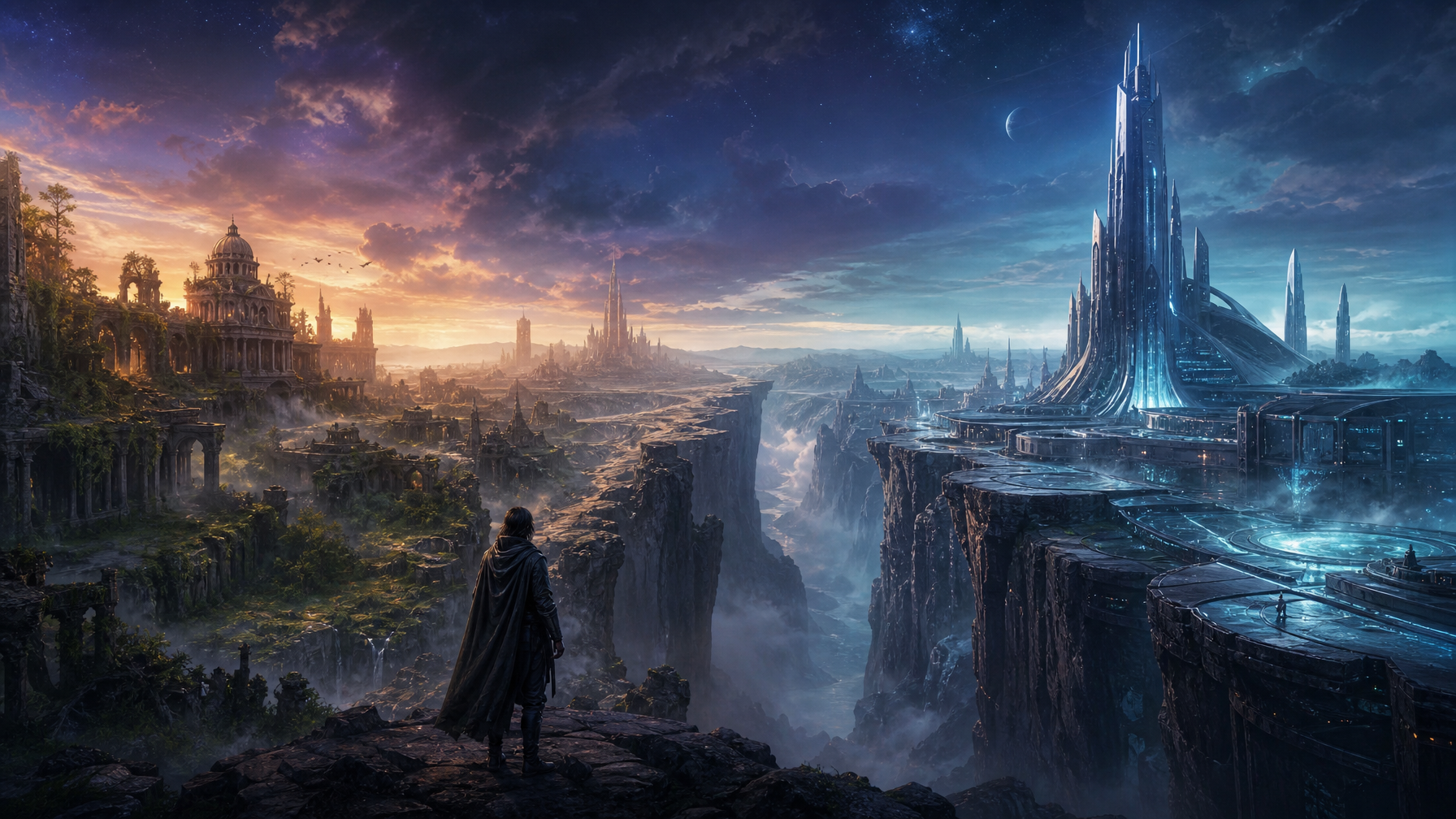
If the World Broke Apart Tomorrow: The Best Fractured Civilisation Sci-Fi Books to Read Right Now May 23, 2026 – Posted in: Book Recommendations, Reading Lists, Science Fiction – Tags: best sci-fi novels, civilisation collapse fiction, dystopian sci-fi, fractured civilisation sci-fi, post-collapse fiction, Sarah Bennett, sci-fi books, speculative fiction
Description
Fractured civilisation sci-fi explores what happens when society splinters — and who we become in the aftermath. Discover the best books in this gripping subgenre, from slow-burn societal collapse to full-scale civilisational rupture.
If the World Broke Apart Tomorrow: The Best Fractured Civilisation Sci-Fi Books to Read Right Now
There's something about a broken world that makes for the most honest kind of storytelling.
Not the cartoonish apocalypse of flying saucers and mushroom clouds — but the slower, more unsettling kind. The kind where civilisation doesn't explode so much as it unravels. Where the infrastructure we rely on silently fails, the institutions we trust quietly hollow out, and the social contracts we've always taken for granted simply… stop holding.
That's what fractured civilisation sci-fi does best. It strips society down to the studs and asks a question that feels uncomfortably relevant right now: what actually holds us together — and what happens when it doesn't?
If you haven't explored this corner of science fiction yet, consider this your invitation. And if you're already a fan, here's a reading list worth bookmarking.
What Is Fractured Civilisation Sci-Fi?
It sits at a fascinating intersection. Part dystopian fiction, part social commentary, part survival thriller — fractured civilisation stories are built around societies that have broken apart, whether through war, environmental collapse, political fracture, pandemic, or slow institutional rot.
The best examples aren't interested in the spectacle of collapse. They're interested in aftermath. In the pockets of humanity that persist. In the communities that form, the power structures that re-emerge, and the uncomfortable moral choices that follow.
Think of it as the genre that asks: if everything we built fell away, would we build something better — or just repeat the same mistakes?
Why Readers Are Drawn to This Subgenre Right Now
It's hard to ignore the obvious: the world feels fragile in ways it perhaps didn't a generation ago. Climate instability, geopolitical tension, eroding trust in institutions, the speed of technological change — readers are turning to fractured civilisation stories not to be frightened, but to think.
This genre offers a safe space to rehearse difficult questions. What systems actually serve human flourishing? What does community look like when the safety net is gone? What are we willing to do for survival — and where do we draw the line?
It's speculative fiction doing what it has always done best: using an imagined future to say something true about the present.
The Hallmarks of a Great Fractured Civilisation Story
Not all collapse fiction hits the mark. The books that linger are the ones that get a few key things right.
1. The fracture feels earned
The best stories in this subgenre don't drop you into a broken world without explanation. The cracks are visible from the opening pages — social, economic, political. You see the collapse coming the way you see a storm building on the horizon. By the time things shatter, it feels not just believable, but inevitable.
2. The focus is on people, not plot mechanics
The collapse is the backdrop, not the point. What matters is the human drama unfolding against it. Communities forming and fragmenting. Leaders rising and betraying. Ordinary people making extraordinary decisions. The mechanics of how the world broke matter far less than who is left standing in the rubble, and why.
3. It holds genuine moral tension
The great fractured civilisation novels don't have clean heroes and obvious villains. The person making the brutal call to protect the group might be right. The idealist clinging to pre-collapse values might be doomed — or might be the only one worth following. That moral complexity is the engine.
4. It leaves you with questions, not answers
The best books in this genre don't resolve neatly. They put you down on the last page with something unresolved buzzing in your chest — not frustration, but the productive discomfort of a question you haven't finished answering yet.
What to Look for in Your Next Read
If you're building a fractured civilisation reading list, here are a few angles worth exploring:
The slow-burn societal fracture — stories that begin in a world that still mostly functions, and trace the precise fault lines as they widen. These are often the most chilling, because the world looks so much like our own at the start.
The aftermath community — stories set well past the initial collapse, focused on what people have built from the wreckage. These tend to be more hopeful, or at least more interested in resilience than ruin.
The institutional collapse — stories where it isn't bombs or pandemics that break things, but the failure of governments, economies, or information systems. These hit closest to home in the current moment.
The fragmented map — stories where different regions, factions, or communities have fractured into entirely different civilisational models. The tension between those models is where the story lives.
Edenroot Press and the Fractured Civilisations Shelf
At Edenroot Press, the sci-fi catalogue is built for readers who want their speculative fiction to carry real weight.
Sarah Bennett writes in exactly this tradition — stories where civilisational fracture is the canvas for deeply human questions about identity, community, and what we owe each other when the rules no longer apply. Her work belongs in the same conversation as the genre's best, and she brings a clarity of voice that makes even the most complex societal collapse feel immediate and personal.
She's part of a wider stable of science fiction writers at Edenroot whose work spans the full spectrum of the genre. Michael Tran explores the existential questions that technology and post-human futures raise. Rebecca Holt brings a sharp political intelligence to dystopian and civilisation fiction. Nathan Brooks works the disaster and thriller end of the spectrum, where collapse arrives fast and the story is about who survives and why.
If fractured civilisation sci-fi is your corner of the reading world, Edenroot's sci-fi shelf is worth a browse — it's stocked with writers who take the genre seriously and have something real to say.
A Quick Checklist Before You Dive In
Before you pick up your next fractured civilisation read, it's worth asking:
- Do you want the before (watching the cracks form) or the after (surviving the rubble)?
- Do you want moral clarity or moral complexity?
- Are you looking for hope in the ruins, or a more unsparing kind of honesty?
- Do you want the collapse to feel familiar and near-future, or strange and far-flung?
Your answers will point you to the right shelf. But wherever you start, this subgenre rewards the investment. These stories stay with you. They reframe the news you read the next morning. They make you look at the institutions around you with new, slightly unsettled eyes.
And that, ultimately, is what the best science fiction has always been for.
Start Reading
If this sounds like your kind of fiction, head over to edenrootpress.com and explore the sci-fi catalogue. Sarah Bennett's fractured civilisations work is a strong place to start — and once you're in, you'll find a whole community of Edenroot authors writing the kind of speculative fiction that takes the genre seriously.
The world is complicated. Good science fiction helps you think about it better.