

How to Boost Your Self-Confidence in 30 Days
Personal Development250 pagesPublished 21 June 2025Kindle, paperback & hardcoverPersonal Development
What if, in just 30 days, you could stop second-guessing yourself, speak up without fear, and finally feel proud of who you are?
How to Boost Your Self-Confidence in 30 Days is a powerful, practical guide for anyone ready to break free from self-doubt and live boldly. Written by leading confidence coach Jordan Blake, this life-changing book blends psychology, real-world stories, and empowering daily challenges that will change how you see yourself, and how you show up in the world.
Inside this 30-day journey, you’ll learn how to:
- Rewrite limiting beliefs and silence your inner critic
- Build powerful daily habits that strengthen confidence
- Speak up in meetings, relationships, and tough moments
- Recover from setbacks without spiraling into shame
- Discover your purpose and use it to fuel lasting self-assurance
Whether you’ve struggled with self-esteem for years or simply want to feel more in control of your life, this book will help you create lasting inner confidence, from the inside out.
Read the first chapter
Chapter One: The Confidence Myth
Let me tell you something you might not expect to hear from a confidence expert:
I used to believe that confidence was about being the loudest person in the room. The one with the firmest handshake, the boldest opinions, the most polished smile. And for a while, I wore that version of confidence like a costume, until I realised it was suffocating me.
One afternoon, I was coaching a client named Sarah. She was a high-performing executive, the kind who breezes through meetings, commands attention, and ticks every box on paper. Yet, in our private sessions, she whispered things like: "I feel like a fraud." "I don't think I'm as good as they think I am." "I keep waiting to be found out."
That day, something clicked for me. Confidence wasn't what I'd been taught to chase. It wasn't about appearances or volume. It wasn't about performing. It was something deeper, quieter, and infinitely more powerful. And Sarah wasn't alone, millions of us are operating under a myth.
The Myth We’ve Been Sold
The world feeds us a version of confidence that's often brash, external, and performative. Social media celebrates flawless selfies and bold declarations. Job interviews favour those who "sell themselves." Pop culture gives us characters who swagger and boast. Somewhere along the way, we've confused confidence with arrogance, bravado, or perfection.
Here's what that looks like in real life:
– You force a smile when you're anxious inside.
– You overcompensate with humour, fashion, or forcefulness.
– You say "yes" to things you don’t want, just to keep the peace.
– You hold back your opinion because you're afraid of being wrong.
These behaviours don't mean you're confident, they mean you're surviving.
And here's the truth: You don’t need to be fearless to be confident.
You don't need to know everything, look perfect, or get constant validation. Real confidence doesn't come from pretending. It comes from aligning who you're on the inside with how you show up on the outside.
Why Most People Fake It, Fear It, or Misunderstand It
Let’s take a moment to unpack this.
1. Faking It
The old "fake it till you make it" advice isn't entirely wrong, but it's incomplete. Faking it might get you through the door, but it won't keep you steady once you're inside.
Faking confidence can be helpful in small doses, like pushing yourself to speak up in a meeting. But when it becomes your default mode, it disconnects you from authenticity. You end up performing a version of yourself you think others want, rather than standing in your truth.
2. Fearing It
Yes, many of us fear confidence. Why? Because genuine confidence challenges the narratives we’ve been told:
– Don’t be too loud.
– Don’t show off.
– Stay humble.
– Be likeable.
So we shrink ourselves to fit into the boxes we were handed. We fear that being confident means being rejected, judged, or seen as "too much."
Confidence, then, feels dangerous. It invites visibility, and with visibility comes vulnerability.
3. Misunderstanding It
We confuse confidence with:
– Extroversion
– Competence
– Aggression
– Popularity
But confidence isn’t any of these things on their own. You can be confident and quiet. You can be confident and still learning. You can be confident and kind. You can be confident and different.
The misunderstanding runs deep. That’s why so many smart, capable people still feel small.
Dr. Blake's Definition of Genuine Self-Confidence
So what is confidence, really?
Here’s the definition I work with:
Self-confidence is the internal trust that you can handle whatever happens, show up as your authentic self, and remain grounded in your worth, even when things feel uncertain.
Let’s break that down.
– Internal trust means you know you won’t abandon yourself when it matters. You’ve got your own back.
– Show up as your authentic self means you’re not putting on a mask or adjusting yourself for approval.
– Remain grounded in your worth means you understand that your value isn’t based on what you produce, how you look, or whether everyone agrees with you.
Confidence is an inside job. And it's something you build, not something you're born with. It grows in small daily actions, in moments of truth, and in the decisions you make about how you speak to yourself.
You don’t need to wait until you’re perfect, ready, or fearless.
You can begin right now.
The 30-Day Confidence Transformation Model
That’s why I created this book: to give you a practical, science-backed, emotionally grounded path to real confidence.
Over the next 30 days, we’re going to walk through a process that rewires how you think, feel, and show up.
This isn’t a "quick fix" or a bunch of cheesy affirmations. It’s not about learning to talk louder or dominate conversations. It’s a reset.
Here’s how the model works:
Week 1: Rewiring Your Inner World
We begin with the beliefs. The stories you’ve absorbed from family, culture, school, and experience. We'll question them, challenge them, and rewrite them. You can't build a skyscraper on shaky foundations. This is where the deep work happens.
Week 2: Strengthening Emotional Resilience
You’ll learn to regulate self-doubt, shame, comparison, and anxiety, the emotional quicksand that keeps you stuck. We'll build the habits that stabilise you emotionally, so confidence becomes your baseline.
Week 3: Speaking Up and Showing Up
Now, with a stronger foundation, we move into self-expression. From difficult conversations to public speaking to boundary-setting, this is where confidence becomes visible.
Week 4: Embodying Confidence Daily
Finally, we bring it all together. Confidence isn’t a one-time event. it’s a way of being. This week is about integrating everything into your identity, so that confidence becomes who you are, not just what you do.
Each day will offer a short lesson, a practical tool, a reflection, and a small action step. You’ll build confidence in 30 days, one simple but meaningful step at a time.
A Story: Adam’s Turning Point
Let me introduce you to Adam. He was a secondary school teacher in his late 30s when he came to me. Bright, thoughtful, endlessly competent, but invisible. He never spoke up in staff meetings. He avoided confrontation. He second-guessed every decision he made in the classroom.
"I just don’t think I’m that kind of person," he said.
What kind of person?
"Confident. The type people listen to. The type who gets promoted."
Over 30 days, we worked on his internal narratives. We tackled his fear of being wrong. We practised speaking up in low-stakes settings. We role-played hard conversations. We reframed his definition of success.
He didn’t turn into a different person. But he started showing up differently. His ideas began to land. His students responded with more respect. He asked for a leadership opportunity, and got it.
Confidence, it turns out, wasn’t about becoming louder. It was about becoming truer.
Your Turn
As you begin this journey, I want you to know something important:
You are not broken. You don't need to be fixed.
What you need is to reconnect with your core. To remember who you're beneath the noise. To stop performing and start believing.
So let’s start today by unlearning the myth.
Reflect:
– Where did your current beliefs about confidence come from?
– What’s one way you’ve been "faking it"?
– How would it feel to show up just 10% more as yourself?
Action Step:
Today, notice when you adjust yourself to fit in or seek approval. Just notice. Awareness is the first step to change.
Tomorrow, we’ll explore the hidden narratives shaping your confidence. Get ready to meet the voice inside your head, and learn how to rewrite its script.
Because you don’t need to fake confidence anymore. You’re about to build the real thing.
"Confidence is not 'they will like me.' Confidence is 'I'll be fine if they don't.'", Christina Grimmie
The Neuroscience Behind Confidence
Modern neuroscience has given us a clearer picture of what confidence actually looks like inside the brain. When we feel confident, the prefrontal cortex, the brain's executive control centre, works in harmony with the limbic system. The amygdala, our threat-detection centre, quiets down. Dopamine flows. We think more clearly, make better decisions, and feel more connected to the people around us.
When confidence drops, the opposite happens. The amygdala hijacks the show. Cortisol floods the system. Our thinking becomes narrow, reactive, and self-protective. We freeze in meetings, second-guess emails, and rehearse conversations in our heads for hours before (or instead of) having them.
This matters because it tells us something crucial about the nature of confidence: it isn't fixed. It isn't a personality trait you're born with or without. It's a neural state that can be cultivated, strengthened, and restored through deliberate practice. The exercises in this book are designed to do exactly that, to train your brain toward confidence, one small action at a time.
Dr. Alex Korb, a neuroscientist at UCLA, has written extensively about how small shifts in behaviour, like improving posture, practising gratitude, or naming an emotion, can create measurable changes in brain chemistry. These aren't dramatic interventions. They're daily habits. And over time, they accumulate into something that feels a lot like the confidence you've been waiting for.
Consider the work of Dr. Carol Dweck at Stanford University. Her research on mindset has shown that people who believe their abilities can be developed (a "growth mindset") are significantly more resilient, more motivated, and more successful than those who believe their abilities are fixed. Confidence, like intelligence, is not a static trait. It is a capacity that grows with effort, challenge, and the willingness to fail and try again.
This has profound implications for how we approach the next 30 days. If you have been operating under the assumption that confidence is something you either have or you don't, I'm asking you to set that belief aside. Just for now. Just long enough to test a different hypothesis: that confidence can be built, systematically, through daily practice. The evidence, as you will see, is overwhelming.
The exercises in this book aren't arbitrary. Each one is designed to target a specific neural pathway, a specific pattern of thought or behaviour that contributes to how confident you feel. Some will feel easy. Others will make you uncomfortable. That discomfort is the signal that something is shifting. Lean into it. Your future self will thank you.
A Confidence Self-Assessment
Before we go any further, it can be helpful to take stock of where you're right now. Not to judge yourself, but to create a baseline. When you revisit this assessment at the end of the 30 days, you will likely be surprised by how much has shifted.
Rate each of the following statements on a scale from 1 (strongly disagree) to 5 (strongly agree). I feel comfortable sharing my opinion in group settings. I can receive a compliment without deflecting it. I trust my own judgment when making decisions. I feel worthy of love and respect, regardless of my achievements. I can set boundaries without excessive guilt. I bounce back quickly from criticism or setbacks. I feel at ease in my own skin, even in unfamiliar situations. I speak up when something matters to me, even if it's uncomfortable. I celebrate my wins without minimising them. I believe I am capable of handling whatever life throws at me.
Add up your score. A total between 10 and 25 suggests that confidence is an area where significant growth is possible, and this book will be especially valuable for you. A score between 26 and 40 suggests that you have a moderate foundation but specific areas where you can deepen your confidence. A score between 41 and 50 suggests that you already have a strong base and will benefit from the advanced strategies and deeper reflection in later chapters.
Whatever your score, remember: it's a snapshot, not a sentence. It tells you where you're today. It says nothing about where you will be in 30 days. Write down your score and the date. We will come back to it.
Case Study: The Surgeon Who Couldn't Decide
Dr. Priya Sharma was one of the top cardiovascular surgeons in her hospital. She had a spotless record, glowing patient reviews, and the respect of every colleague on her floor. And yet, when her department head retired and the hospital board invited her to apply for the position, she froze. "I spent three weeks writing and rewriting the application," she told me later. "I kept imagining all the ways I'd fail. I'd never managed a budget. I'd never overseen staff reviews. I convinced myself I wasn't ready."
Priya's story is remarkably common among high-achieving people. She didn't lack evidence of competence. She had years of it. What she lacked was the internal permission to step into unfamiliar territory. Her confidence was domain-specific: she trusted herself in surgery but nowhere else. And that gap, between what she could demonstrably do and what she believed she could do, is the gap this book is designed to close.
What eventually shifted for Priya wasn't a motivational speech or a personality makeover. It was a series of small, daily practices. She started by writing down three things she'd handled well each day, things that had nothing to do with surgery: a difficult conversation with a colleague, a budget decision at home, a moment when she'd spoken up in a meeting. Within two weeks, she began to see herself differently. Not as a surgeon who could maybe lead, but as a leader who also happened to be a surgeon.
She submitted the application. She got the job. A year later, she told me the hardest part wasn't the role itself. It was believing she deserved to be in it.
The Confidence-Competence Loop
Psychologists have identified a phenomenon known as the confidence-competence loop. It works like this: when you take action (even small action), you build competence. When you notice that competence, you build confidence. And when you feel more confident, you take more action. The loop feeds itself. But it has to start somewhere, and that starting point is almost always a decision to act before you feel ready.
This is why waiting until you "feel confident" to make a change almost never works. Confidence doesn't precede action. It follows it. Every chapter in this book is designed to give you a specific, manageable action that kicks the loop into motion. You don't need to feel brave. You just need to do the next small thing.
Research by Dr. Richard Petty at Ohio State University has shown that the act of committing to a position, even tentatively, changes how people process subsequent information. Once you take a stand, your brain starts looking for evidence that supports it. This means that the very act of deciding "I am going to work on my confidence" has already begun to reshape how you see yourself. You're not the same person who opened this book ten minutes ago.
That is the end of chapter one.
The rest of How to Boost Your Self-Confidence in 30 Days is waiting for you.

Or take the whole collection
The Confidence Foundations Collection
Self-doubt, discipline, assertiveness and comparison treated as one system rather than five separate problems. Fifteen books of practical steps.
Get the collection, $39.99Jordan Blake · 15 books · instant download, read on any device
The series
Personal Mastery Series
- Book 1How to Boost Your Self-Confidence in 30 DaysYou are here

- Book 27 Steps to Overcome Self-Doubt and Unlock Your Full Potential

- Book 3How to Discover Your Life Purpose and Live a Life of Meaning

- Book 47 Steps to Conquer Your Fears and Build Courage

- Book 5How to Stop Self-Sabotaging Your Success

- Book 610 Secrets to Unshakeable Self-Esteem

- Book 7How to Break Out of Your Comfort Zone and Achieve More

- Book 87 Steps to Master Self-Discipline

- Book 9How to Motivate Yourself Every Day

- Book 107 Steps to Set and Achieve Any Goal

- Book 11How to Develop a Growth Mindset for Success

- Book 12How to Learn Anything Faster

- Book 13How to Be More Assertive Without Being Aggressive

- Book 14How to Overcome Perfectionism

- Book 15How to Stop Comparing Yourself to Others

- Book 16Confidence Foundations: The Complete System

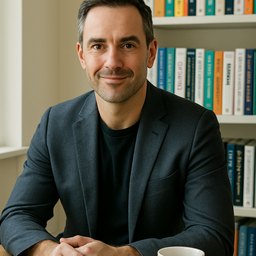
About the author
Jordan Blake
Confidence Coach
Jordan Blake is a leading voice in confidence psychology and practical personal development.
More about Jordan Blake