

Confidence Foundations: The Complete System
Build Self-Trust, Overcome Self-Doubt, Take Consistent Action, and Create Confidence That Lasts
Personal Developmentpaperback & hardcoverPersonal Development
You do not need to feel confident before you act. In most of the things that matter, confidence arrives afterwards.
You hesitate before speaking. You rehearse a decision long after it should have been made. Or your confidence looks perfectly fine from outside, and one criticism still stays with you for days.
Personal development usually hands you these problems in separate rooms. Build discipline over here. Challenge your thinking over there. Set goals somewhere else. Each idea helps a little. None of them says how they fit together.
This book is the system underneath all of them. Action produces evidence. How you read that evidence sets how far you trust yourself. Self-trust is what makes the next, larger action possible. Find where your own loop breaks and you know which problem you are actually solving.
That is why generic advice disappoints. Believe in yourself does nothing for avoidance. Take action is useless if you already act and dismiss every result. Be disciplined will not carry you towards goals you never wanted.
Fifteen books covered the pieces. This is the book between the books, and it tells you which one you need next.
The capstone to Jordan Blake’s fifteen-book Personal Mastery Series, and a complete system in its own right. No prior reading required.
Read the first chapter
Chapter One: Confidence Is an Output, Not an Input
Many people organise their lives around a rule they have never consciously chosen: I will do the thing when I feel confident enough.
It sounds sensible. If you are going to speak in a meeting, change career, begin dating again, set a boundary, learn a difficult skill, publish something, ask for more responsibility, or make a decision without endless reassurance, surely confidence should come first.
So you wait for the feeling.
You research. You prepare. You imagine. You collect advice. You watch people who already seem comfortable doing the thing. You may even criticise yourself for not having the confidence they appear to possess.
The feeling sometimes arrives. More often it arrives briefly, disappears under pressure, or fails to show up at all.
This is not because you are uniquely deficient. The sequence is backwards.
Confidence is often a consequence of participation.
You act, then you discover something about your ability to act. You handle a response, adjust, repeat, and slowly become less dependent on needing confidence in advance.
That is why confidence is better understood as an output.
The Lagging Indicator
Think about any skill you now perform with relative ease.
Perhaps you drive, cook a few reliable meals, use a piece of software, manage a household, navigate a familiar city, give a presentation, parent a child, repair things, negotiate with suppliers, teach a class, care for somebody, or handle a kind of problem that once felt intimidating.
Your present confidence is built on history.
You have examples. You know what happens when something goes wrong. You know which mistakes are recoverable. You know where your weak spots are. You have felt confused before and found your way through. Even when you do not consciously review this history, it is available to you.
Confidence lags behind contact with reality.
This explains a pattern that can otherwise feel unfair. At the beginning of something new, you may be intelligent, prepared, and genuinely capable of learning, yet still feel less confident than somebody with more experience. Their advantage is not necessarily greater talent. They possess a thicker file of evidence.
Trying to manufacture the final feeling before you have accumulated the history that supports it can create pressure without progress.
You are asking yourself to feel like an experienced person while still protecting yourself from the experiences that would make you one.
The Cost of Treating Confidence as Permission
When confidence becomes a prerequisite, uncertainty turns into a stop sign.
You may delay sending an application because you cannot be sure you are good enough. You may stay silent in a conversation because you cannot guarantee that your point is correct. You may avoid a class because you do not want to look inexperienced. You may remain in a role that no longer fits because the next move does not feel certain.
The immediate effect is relief. You avoid exposure to embarrassment, rejection, conflict, or the possibility of finding out that something is harder than you hoped.
The longer-term effect is different.
You lose the chance to gather new evidence.
Nothing is tested. Nothing is updated. The mind is left with its existing story.
If the story is “I do not cope well with conflict”, avoiding conflict prevents you from seeing whether that is still accurate. If the story is “I am bad at learning technical things”, refusing to practise keeps the belief insulated. If the story is “people will think I am difficult if I say no”, never saying no means the prediction remains strangely powerful because reality never gets a vote.
Avoidance can therefore preserve uncertainty while making it feel like proof.
You do not act because you lack confidence, then you use the absence of action as evidence that you were right not to feel confident.
The loop closes, but in the wrong direction.
Confidence and Readiness Are Not the Same Thing
There are times when waiting is wise.
You may need more information. A decision may carry real legal, financial, medical, or safety consequences. You may need training before attempting something. Another person may need to be consulted. Fatigue may be distorting your judgement. A situation may be unsafe rather than merely uncomfortable.
The goal is not to turn hesitation into a moral failure.
The useful distinction is between preparation that increases your ability to act and preparation that protects you from ever having to find out.
Productive preparation has an endpoint. It answers specific questions. It reduces a real knowledge gap. It makes the next action clearer.
Protective preparation expands indefinitely. Every answer creates another requirement. You need one more article, one more opinion, one more qualification, one more sign that the outcome will be favourable.
The feeling you are chasing is not readiness. It is certainty.
And certainty is often unavailable.
A more useful question is: what level of uncertainty is reasonable for this decision, and what is the smallest responsible action I can take with the information I have?
This reframes confidence as movement under uncertainty rather than the elimination of uncertainty.
Domain Confidence
People often speak as if confidence were one substance stored in a single tank. You either have a lot or a little.
Real life is messier.
You can be confident at work and hesitant in relationships. You can speak easily to strangers and freeze around authority. You can trust your judgement with money and second-guess yourself as a parent. You can be bold when helping other people and cautious when your own work is being judged.
This matters because global labels distort the evidence.
“I am not a confident person” takes a pattern from one or two areas and turns it into identity. Once the label becomes identity, contradictory evidence is easy to ignore. The meeting you handled well does not count because you were nervous. The boundary you set does not count because it took you three days to build up to it. The decision you made independently does not count because you asked one person for advice first.
A more accurate statement might be: “I lose confidence when I cannot predict other people’s reactions.” Or: “I trust myself once I have started, but I struggle with initiation.” Or: “I am confident in familiar skills, but I interpret beginner mistakes too harshly.”
Specificity gives you somewhere to work.
Identity labels give you somewhere to hide.
What Action Can and Cannot Prove
If action builds confidence, it is tempting to assume that every action must succeed.
That would make the system fragile.
You apply for a role and do not get it. You try to set a boundary and the other person is unhappy. You speak in a meeting and your idea is not used. You follow a plan for two weeks and then have a chaotic week. You learn a skill and discover that progress is slower than expected.
If the only acceptable evidence is a favourable outcome, your confidence remains controlled by variables outside you.
Action can generate several kinds of evidence.
It can show that you are capable of beginning.
It can show that you can tolerate uncertainty.
It can reveal a skill gap that is specific enough to improve.
It can show that rejection hurts but is survivable.
It can show that a difficult conversation can be repaired.
It can show that a plan needs changing rather than abandoning.
It can show that you misjudged the situation.
Even that last form of evidence can strengthen self-trust when you respond honestly. Being able to say, “I got this wrong, and I know what I will do differently,” is more robust than needing to prove that you never get anything wrong.
Confidence is not a record of uninterrupted success. It is a record of contact, learning, and response.
The Confidence Paradox
There is a paradox at the centre of this work.
You may need to act before you feel like the kind of person who can act.
That does not mean pretending. It does not mean performing a fake personality or forcing yourself into enormous risks to prove a point.
It means allowing behaviour to provide information that thought alone cannot provide.
Suppose you believe you are incapable of speaking clearly when challenged. You can think about this belief for months. You can analyse where it came from. You can create convincing arguments for and against it.
Then one day you decide to make a small request you would normally avoid. Your voice shakes. The conversation is awkward. You still make the request.
The outcome may not be dramatic, but your evidence has changed.
The old belief was absolute: “I cannot speak up when I feel intimidated.”
The new evidence is more precise: “I can speak up while feeling intimidated, although I need practice staying concise.”
That is a meaningful shift.
Confidence often grows through better accuracy before it grows through better feelings.
The Waiting Audit
The first practical step is to identify where you have made confidence a condition of participation.
The Waiting Audit
Choose one area of life where you have been waiting. Finish this sentence as plainly as you can: “I will do ______ when I feel more confident about ______.”
Now ask what you believe confidence would give you. Certainty? Protection from embarrassment? A guarantee that you will perform well? Permission to disappoint somebody? Proof that you belong?
Separate what genuinely needs more preparation from what can only be learned through contact with reality.
Name one action small enough to be responsible but real enough to create new evidence within the next seven days.
Do not choose a symbolic action if a real one is available. Reading another article about assertiveness is not the same as making a clear request. Watching a video about public speaking is not the same as contributing one prepared point in a meeting. Rewriting your goals is not the same as spending twenty focused minutes on the work.
The action should touch the thing you are waiting to feel confident about.
You Are Not Trying to Feel Nothing
Some readers hear “act before confidence” and translate it into “ignore your emotions”. That is not the aim.
Fear can contain information. Reluctance can signal a mismatch with your values. Anxiety can become overwhelming. Exhaustion can make an otherwise manageable task unwise. Your history can make certain situations genuinely more difficult than they appear from the outside.
The system works best when emotion is treated as information, not command.
You can listen to a feeling without automatically obeying it.
You can notice, “I am frightened because this matters and because I cannot control the response,” then decide whether the action is still appropriate.
You can notice, “I am resisting this task because I am tired and the plan is unrealistic,” then reduce the task instead of using discipline as punishment.
You can notice, “I keep calling this fear, but actually I do not want this goal,” then change direction rather than forcing more action.
Agency is not the absence of feeling. It is the ability to include feeling in a wider decision.
The New Sequence
For the rest of this book, we will use a different sequence.
Not: confidence, then action.
Instead: responsible action, evidence, interpretation, self-trust, then larger action.
Sometimes confidence will rise quickly. Sometimes it will lag. Sometimes you will do something brave and feel worse for a day because the experience exposed how much the situation matters to you.
Do not make the immediate feeling the only measure.
Ask what the action taught you.
Ask what you now know that you did not know before.
Ask whether your picture of yourself became more accurate.
Ask what the next reasonable action is.
Confidence becomes much easier to work with when you stop demanding that it arrive first.
The next chapter turns that sequence into a full operating model. We will look at each stage of the Evidence Loop, how the stages influence one another, and why two people can take the same action and come away with completely different levels of self-trust.
That is the end of chapter one.
The rest of Confidence Foundations: The Complete System is waiting for you.

Or take the whole collection
The Confidence Foundations Collection
Self-doubt, discipline, assertiveness and comparison treated as one system rather than five separate problems. Fifteen books of practical steps.
Get the collection, $39.99Jordan Blake · 15 books · instant download, read on any device
The series
Personal Mastery Series
- Book 1How to Boost Your Self-Confidence in 30 Days

- Book 27 Steps to Overcome Self-Doubt and Unlock Your Full Potential

- Book 3How to Discover Your Life Purpose and Live a Life of Meaning

- Book 47 Steps to Conquer Your Fears and Build Courage

- Book 5How to Stop Self-Sabotaging Your Success

- Book 610 Secrets to Unshakeable Self-Esteem

- Book 7How to Break Out of Your Comfort Zone and Achieve More

- Book 87 Steps to Master Self-Discipline

- Book 9How to Motivate Yourself Every Day

- Book 107 Steps to Set and Achieve Any Goal

- Book 11How to Develop a Growth Mindset for Success

- Book 12How to Learn Anything Faster

- Book 13How to Be More Assertive Without Being Aggressive

- Book 14How to Overcome Perfectionism

- Book 15How to Stop Comparing Yourself to Others

- Book 16Confidence Foundations: The Complete SystemYou are here

About the author
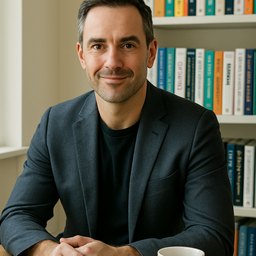
Jordan Blake
Confidence Coach
Jordan Blake is a leading voice in confidence psychology and practical personal development.
More about Jordan Blake