
What Makes Disaster Sci-Fi Thrillers So Impossible to Put Down May 26, 2026 – Posted in: Book Recommendations, Fiction, Science Fiction, Thrillers – Tags: apocalyptic fiction, book recommendations, disaster fiction, disaster sci-fi, Nathan Brooks, sci-fi thrillers, science fiction thrillers, survival fiction
What Makes Disaster Sci-Fi Thrillers So Impossible to Put Down
There's a specific kind of book that has you reading at 1am with the lights on, heart thumping, telling yourself "just one more chapter" — and then sunrise finds you bleary-eyed and entirely without regret.
Disaster sci-fi thrillers are that book.
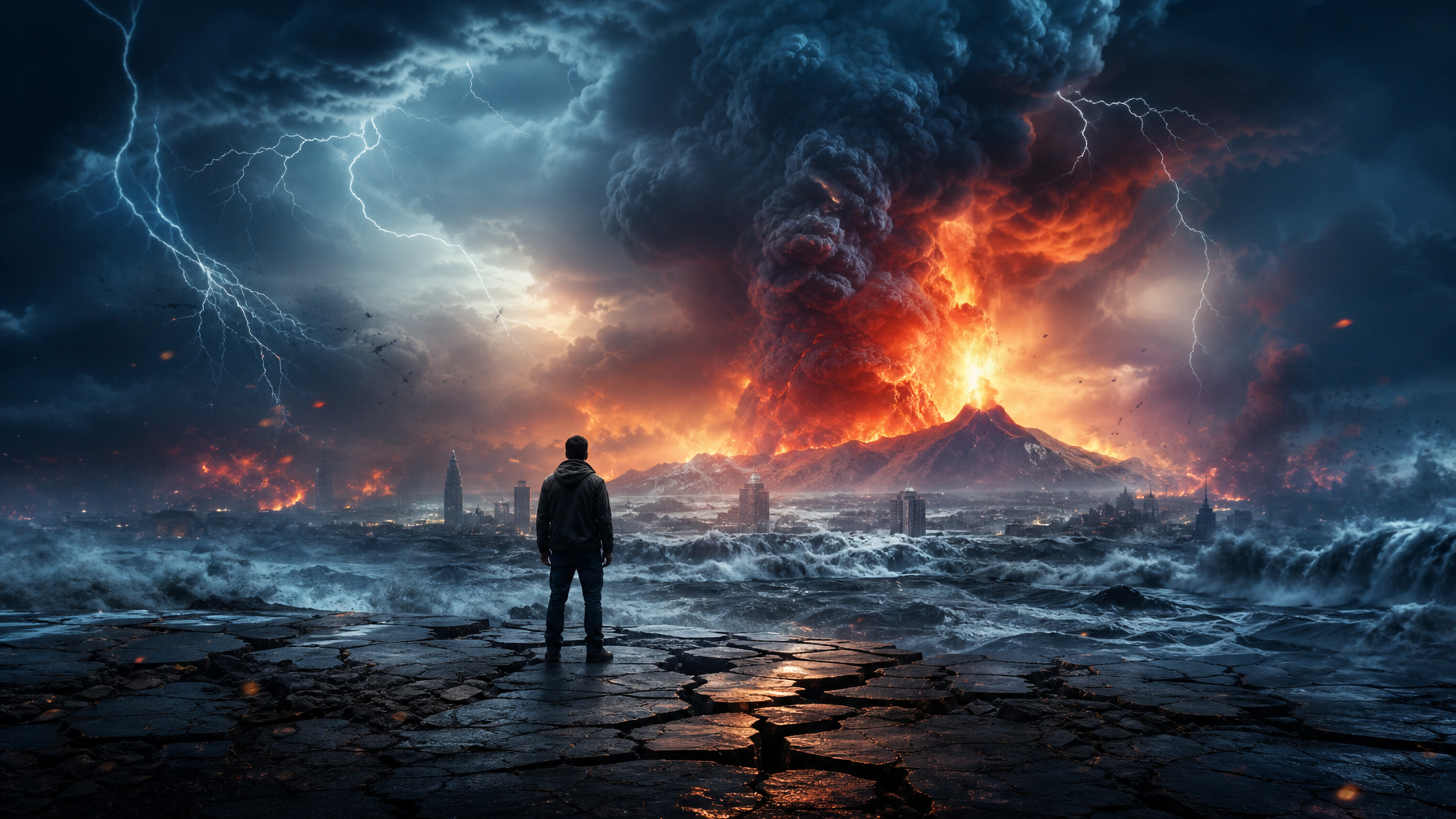
Whether it's a supervolcano tearing apart the Pacific Northwest, a solar flare wiping out the global power grid, or an engineered pathogen spreading faster than any government can contain it, these stories grab you by the collar and don't let go. And they're having a serious moment right now. If you've ever wondered why this genre is so utterly addictive — or you're looking for your next obsession — you're in the right place.
The Perfect Storm of Two Genres
Disaster sci-fi thrillers sit at the intersection of two of the most pulse-pounding genres in fiction.
Science fiction brings the what if — the grounded, scientifically plausible scenario that makes the disaster feel terrifyingly real. Thrillers bring the relentless forward momentum, the ticking clock, the impossible choices. Put them together and you get stories where the stakes are nothing less than civilisation itself, told with the pace and urgency of a sprint.
Unlike pure sci-fi, which can sometimes slow down to explore ideas and world-building at leisure, disaster sci-fi thrillers keep the pressure on every single page. The science isn't just backdrop — it's the engine driving the plot.
5 Reasons Readers Can't Get Enough
1. The Stakes Are as High as They Get
In most thrillers, the stakes are personal: one life, one city, one family. Disaster sci-fi expands that to a terrifying scale. The question stops being "will the hero survive?" and becomes "will anyone survive?" That shift in scale creates a uniquely overwhelming kind of suspense — you're not just rooting for a character, you're holding your breath for humanity.
2. The Science Feels Scarily Real
The best disaster sci-fi does its homework. When an author describes how a Cascadia Subduction Zone earthquake would behave, or how a killer pathogen jumps vectors, or what an EMP would actually do to modern infrastructure — you believe it. And believing it is what transforms a thriller into something that lingers in your mind long after you've closed the last page.
This grounded realism is a signature quality you'll find in Nathan Brooks' work. His stories are built on that terrifying "this could actually happen" foundation that disaster sci-fi fans live for.
3. Ordinary People Facing Extraordinary Circumstances
The disaster genre rarely puts a superhero at the centre. The protagonists are geologists, ER doctors, weather researchers, single parents, retired engineers. People who didn't sign up to save the world but find themselves doing it anyway — with incomplete information, limited resources, and the clock running out.
That relatability is everything. When you see yourself in the character, the fear becomes personal.
4. The Survival Problem-Solving Is Genuinely Thrilling
There's a particular satisfaction in watching a character think their way out of an impossible situation using real-world knowledge and ingenuity. Disaster thrillers are full of these moments — the improvised solution, the calculated risk, the split-second decision that costs something precious but saves something more.
Readers often say they feel smarter after finishing a disaster sci-fi novel, because the best ones teach you how systems fail and how humans adapt. That's a rare thing to get from entertainment.
5. They Make You Think About the World Differently
The best disaster fiction isn't nihilistic. It's actually one of the most humanist genres out there. Because when you strip away every modern convenience, every institution, every safety net — what's left? People. Community. Resilience. Sacrifice. The stories that hit hardest are the ones that use catastrophe to reveal what people are truly made of.
That's a far more interesting question than most fiction ever asks.
The Tropes Fans Return to Again and Again
If you're new to disaster sci-fi thrillers, you'll quickly recognise a handful of beloved tropes that readers genuinely can't resist:
- The reluctant expert — a scientist or specialist who knows exactly how bad things are, but no one in power will listen to them until it's almost too late.
- The fractured group — survivors with conflicting priorities who have to figure out how to trust each other (or not) under pressure.
- The race against a countdown — something catastrophic is coming, and there's a very narrow window to prevent it, redirect it, or survive it.
- The quiet after the storm — a sober, often emotional reckoning with what's been lost and what can still be rebuilt. These scenes are where the best disaster fiction earns its emotional payoff.
These are the same structural beats that make the genre so satisfying again and again, regardless of whether the disaster is geological, biological, meteorological, or something we haven't quite imagined yet.
Pair Your Disaster Sci-Fi With More Speculative Fiction
If you love the disaster angle but want to explore related territory, Edenroot Press has you covered.
Sarah Bennett writes fractured civilisation sci-fi that picks up where the disaster ends — examining what societies look like when the systems we take for granted come apart at the seams. Her work asks uncomfortable, brilliant questions about power, governance, and what it means to start over.
And if you want your near-future tech-driven suspense to come with a sharper, more conspiratorial edge, Jason Clarke writes algorithmic rebellion sci-fi that hits like a disaster thriller for the digital age — where the catastrophe isn't a volcano, it's the infrastructure we built and can no longer control.
The whole collection lives at edenrootpress.com/shop/.
Where to Start If You're New to the Genre
The easiest entry point is a book with a clear, singular threat — one disaster, one location, one ticking clock. Once the genre has its hooks in you, you can move to the more sprawling, multi-threaded stories that cross continents and timelines.
Look for books where the science is explained clearly enough to understand but never slows the plot. Look for a protagonist you'd actually want by your side when things go wrong. And look for a story that takes its ending seriously — because in a genre this high-stakes, the payoff has to earn every page of dread that came before it.
Ready to Find Your Next Obsession?
Nathan Brooks writes exactly the kind of disaster sci-fi thrillers this article is about — propulsive, grounded, and genuinely unsettling in the best possible way.
Explore his work and the full Edenroot Press fiction catalogue at edenrootpress.com. Whether you end up reading straight through the night or wisely putting the book down before midnight — we won't judge you either way.