

How to Make Friends as an Adult
RelationshipsKindle, paperback & hardcoverRelationships
Making friends shouldn’t end with childhood.
If you’ve ever felt lonely in adulthood, unsure where to meet people, or like everyone already has their circle, you’re not alone. In this warm, empowering, and deeply practical guide, relationship coach Sophie Hartman shows you how to break through the awkwardness and build the kind of social life you’ve always wanted.
You’ll learn:
- Why adult friendships feel harder (and how to overcome it)
- How to meet people organically, even if you’re introverted or new in town
- Conversation starters, confidence boosters, and connection-building tools
- What to do about one-sided friendships, drifting, or unspoken tension
- How to turn casual acquaintances into close, meaningful relationships
With relatable stories, practical strategies, and powerful mindset shifts, How to Make Friends as an Adult will help you create lasting friendships from exactly where you are, without pretending to be someone you’re not.
You don’t have to be more extroverted, interesting, or impressive. You just have to be willing to begin.
Whether you’re starting over, moving cities, navigating big life changes, or simply craving deeper connections, this book will help you feel less alone, and more at home with the people around you.
Read the first chapter
Chapter One: The Adult Friendship Gap
There’s a quiet ache many adults carry but rarely speak aloud.
You wake up, get through your day, tick off the to-do list, manage the responsibilities. You might interact with dozens of people, colleagues, neighbours, parents at the school gate, even a partner or family members. And yet, something’s missing.
That deeper connection. The feeling of being truly known. The lightness of spontaneous fun. The ability to text someone just because something reminded you of them. In short: friendship.
But when you pause and notice that absence, a second feeling often creeps in: shame. “Why don’t I have close friends anymore?” “Am I the only one who finds this hard?” “Is it just me?”
Let me say this clearly: it’s not just you.
There is a very real and very widespread phenomenon that I call The Adult Friendship Gap. It's the space between our longing for meaningful connection and the reality of how hard it feels to form and maintain close friendships in adulthood.
Let’s unpack why this happens and why understanding the “why” is the first step to bridging the gap.
Why Childhood Friendships Are Easier to Form
Think back to your childhood or teen years. How did you meet your friends?
You were likely thrown together by sheer proximity, at school, in your neighbourhood, during after-school activities. You had time. You had play. You were around people every day with no agenda except to be there and participate. And most importantly: you were open. Everyone was new. Everyone was looking. You had few inhibitions about approaching someone to say, “Wanna be friends?”
In those years, friendship wasn’t something you had to go out and find. It happened organically, simply by existing in shared spaces with others in similar life stages.
Fast forward to adulthood, and everything changes.
The Loss of Proximity and Play
As adults, we’re no longer in constant proximity to potential friends. We no longer show up every day to the same classroom or lunch table. Instead, we live in bubbles, commuting in cars, working from home, juggling families or responsibilities. And even if you are around people, it often doesn’t feel like a natural environment to connect deeply.
Add to this the loss of play. Adults are expected to be efficient, productive, and responsible. We’ve replaced games and late-night chats with emails, errands, and exhaustion. There’s no recess anymore. No after-school hangout. No shared awkwardness of growing up together. Just routines, and lots of them.
The places we do go, work, the gym, our children’s school events, often come with invisible rules or social norms that make striking up genuine friendships feel tricky or inappropriate. You’re not a teenager sitting beside someone on a bus wondering if they like the same band. You’re an adult calculating how weird it might seem to strike up a conversation in a waiting room.
In short: we’ve lost the easy entry points.
Busy Lives, Shifting Priorities, and Digital Disconnection
Time is a precious resource, and adulthood demands a lot of it. Careers, caregiving, home management, and personal development, all compete for our attention. Our priorities shift, and often, friendship gets silently pushed down the list.
But it’s not just about time, it’s about energy. By the end of the day, it’s tempting to collapse on the sofa rather than organise a meetup or follow through on a plan to catch up. Friendships begin to feel like “extra effort,” especially when there’s no strong foundation already in place.
Add to this the paradox of digital disconnection. We live in a hyperconnected world, likes, follows, messages, but often feel lonelier than ever. Social media creates the illusion of connection while offering little of the real thing. You might see someone’s highlight reel every day, but that doesn’t mean they know what’s actually happening in your life, or vice versa.
We confuse visibility with intimacy. And as a result, our friendships remain surface-level, passive, or transactional.
Story: When “Busy” Turns into Lonely
Let me introduce you to Amina, a 38-year-old project manager and single mum of two. She was always on the go, early mornings, school drop-offs, back-to-back meetings, after-school activities, then the evening routine. Her calendar was full, her inbox overflowing, and her house loud with life.
And yet… she felt empty.
It hit her one Friday evening when her kids were with their dad and she sat on the sofa, realising she had no one to text, no one to grab dinner with, no one to even share her weekend plans with. She stared at her phone, scrolled through Instagram, and saw smiling faces of other people’s gatherings. But she wasn’t in any of them.
“I’m always surrounded by people,” she told me in our first coaching session, “but I feel invisible.”
Amina wasn’t lacking people. She was lacking connection. Her life was filled with responsibilities and interactions, but none that fed her emotionally. She wasn’t “too busy” for friends, she’d just been taught to prioritise everything but them.
We worked together to shift her mindset: from reactive to intentional. From waiting to be invited, to doing the inviting. From seeing friendship as a luxury to recognising it as a necessity.
Today, Amina has a small but growing circle of friends, other mums, old colleagues, and even one new neighbour, because she learned how to be proactive and open again. Not magically, not instantly, but intentionally.
You’re Not Alone, Most Adults Feel This Struggle
If you’ve ever sat alone on a weekend wondering who to call or felt a pang of envy watching others laugh together, you’re not alone.
Research consistently shows that making friends in adulthood is one of the most common unmet needs in modern life. A study by YouGov found that one in five adults in the UK say they often or always feel lonely. And many more admit they don’t have a single person they’d call a “close friend.”
This isn’t a reflection of your value, it’s a reflection of a world that’s made connection harder than it used to be.
Friendship Doesn’t Just “Happen” Anymore, It’s Intentional
Here’s the truth that changes everything:
Adult friendships don’t fall into your lap. They’re something you build. On purpose.
In childhood, connection was often effortless. In adulthood, it requires effort, but that doesn’t mean it’s not worth it. Quite the opposite.
Once you understand that friendship is no longer a passive experience but an intentional practice, you gain power. You shift from “Why don’t I have friends?” to “What am I doing to invite connection into my life?”
This mindset shift is liberating. It frees you from the myth that you’re somehow flawed or unworthy. And it opens the door to begin creating the connections you long for.
Understanding the “Why” Removes the Shame
One of the most damaging beliefs about adult loneliness is that it’s personal. That it means you’re unlikeable. That everyone else has figured it out but you.
But the real reason so many of us feel isolated isn’t because we’re not good enough, it’s because the world has changed. The structures that once created friendship, shared school years, regular hangouts, communal rituals, have faded. And in their place, we’re left to navigate connection on our own, often without guidance or support.
That’s why this book exists. To help you build the skills, mindset, and habits that make adult friendship not only possible, but deeply fulfilling.
And it starts right here, with compassion.
You are not broken. You are not alone. You are simply human, living in a disconnected world that doesn’t make friendship easy, but you can still make it happen.
C H A P T E R T A K E A W A Y S
You’re not alone. The struggle to make friends as an adult is real, widespread, and completely normal.
Friendship doesn’t “just happen” anymore. It’s an intentional practice that requires time, vulnerability, and effort.
Understanding the why behind your loneliness or disconnection removes shame and empowers you to take action.
LOOKING AHEAD
That is the end of chapter one.
The rest of How to Make Friends as an Adult is waiting for you.

Or take the whole collection
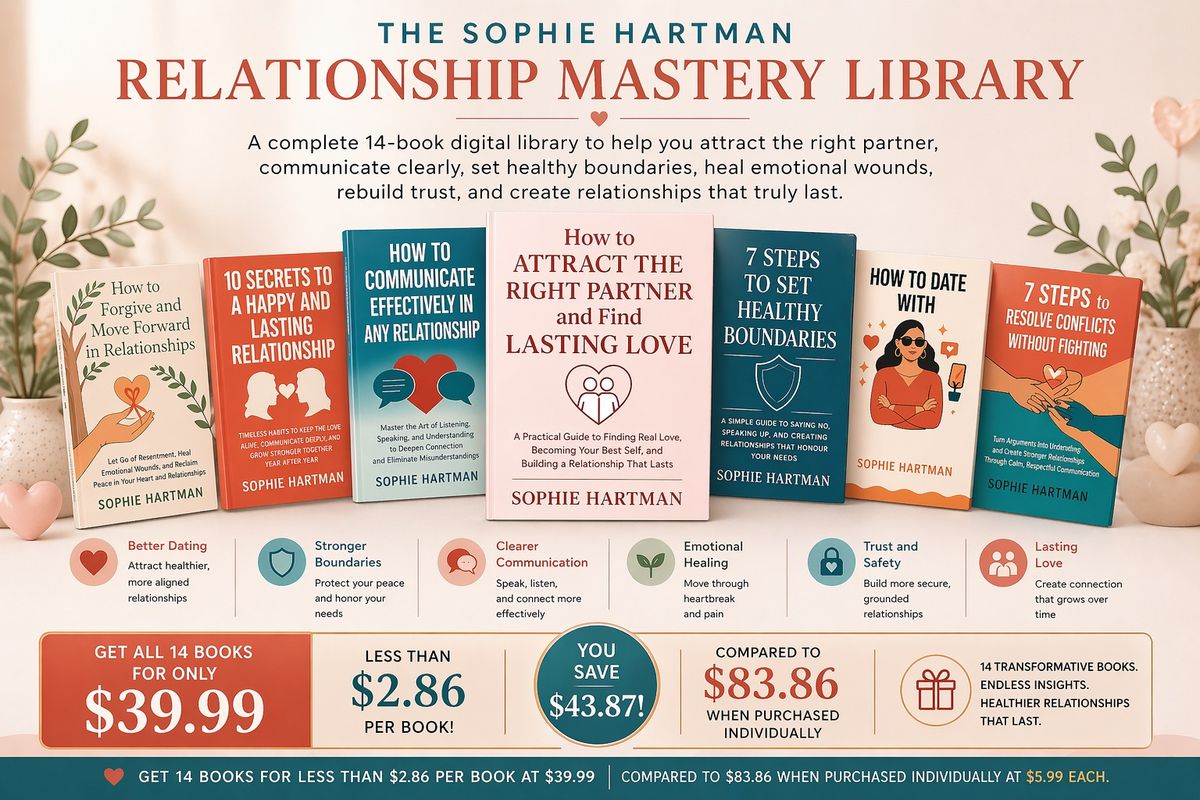
The Relationship Mastery Library
Attract the right partner, communicate clearly, set boundaries that hold and repair what is worth repairing.
Get the library, $39.99Sophie Hartman · 14 books · instant download, read on any device
The series
The Emotionally Intelligent Relationships Series
- Book 1How to Attract the Right Partner and Find Lasting Love

- Book 2How to Communicate Effectively in Any Relationship

- Book 3How to Make Friends as an AdultYou are here

- Book 47 Steps to Set Healthy Boundaries

- Book 5How to Deal with Toxic People

- Book 6How to Get Over a Breakup and Move On

- Book 77 Steps to Reignite the Spark in Your Relationship

- Book 8How to Build Trust in a Relationship

- Book 97 Steps to Resolve Conflicts Without Fighting

- Book 10How to Overcome Shyness in Social Situations

- Book 1110 Secrets to a Happy and Lasting Relationship

- Book 12How to Be a Better Listener

- Book 13How to Date with Confidence

- Book 14How to Forgive and Move Forward in Relationships

- Book 15The Relationship Operating Manual


About the author
Sophie Hartman
Relationship Expert
Sophie Hartman is an internationally recognized relationship coach, bestselling author, and emotional wellness expert. With over 15 years of experience helping women and couples worldwide, she’s known for her warm, relatable guidance that blends psychology, emotional intelligence, and real-life strategy.
More about Sophie Hartman