

The Widow’s Spring
A Clean and Wholesome Amish Romance
Amish RomanceKindleAmish Romance
The quilt pattern she has been stitching for two years is called Widow’s Path. She is beginning to want off it.
Rachel Bontrager was widowed at twenty-seven. At twenty-nine she quilts by propane lamp before the house wakes, sells through the dry goods store, and has arranged a life that asks nothing of anybody.
Then the schoolhouse needs rebuilding, and the carpenter the bishop sends boards with her family through the spring.
Eli does not court her. He mends the gate she had stopped seeing. He takes the long way back from town. He is on the porch step at the hour she is usually alone, and neither of them says a word about it for a very long time.
Maple Bend watches, because Maple Bend always watches. And when Eli’s estranged brother comes back after eleven years, the question stops being whether Rachel is ready and becomes what a family is willing to forgive.
A slow, chaste courtship, a community that holds people up as firmly as it holds them to account, and a second marriage that has to be built rather than fallen into.
Book One of The Maple Bend Amish. Clean and wholesome throughout, a complete story with a happy ending, and the first of a series.
Read the first chapter
Chapter One: Widow's Path
The needle came up through the backing in the dark.
Not true dark. The propane lamp on the sewing table threw a circle across the quilting frame, bright enough for the pattern marks and warm enough that Rachel could feel it on the backs of her hands when she leaned in. But the south window was still black, and the house was still, and the only sounds were the tick of the lamp's regulator and the small, certain pull of thread through cotton.
She was finishing the last nine-patch square on the second row. Widow's Path. The pattern ran dark pieces against light in a chain that looked, if you stepped back far enough, like a road narrowing into the distance. She'd chosen it two years ago for a consignment order at Yoder's Dry Goods, and it had sold in four days to an English couple from Columbus who said it reminded them of a country lane. Rachel hadn't corrected them. A quilt meant what the buyer needed it to mean, and what the quilter needed it to mean, and those didn't have to be the same thing.
She shifted on the wooden chair and stretched her fingers. Twenty-nine years old and already her right hand stiffened if she worked too long without stopping. Naomi had the same trouble and called it the family inheritance, more reliable than the farm.
Outside, a rooster tried a note and quit. Too early even for him.
Rachel found the next mark and set the needle.
This was the hour she liked best, before the house filled up with purpose. In another forty minutes Mamm would be in the kitchen starting oatmeal, and Datt would come in from the barn smelling of hay and the warm particular sourness of the milking parlor, and Miriam would be moving through her morning at the pace Miriam moved through everything, the pace of someone who believed the day had been waiting for her specifically.
But for now the sewing room was Rachel's. The frame stood where it had stood since she was twelve, by the south window where the light was best, though the light was no use to her yet. The walls held the same things they'd always held, the pegboard with her rotary cutter and rulers, the basket of scraps sorted by color, the calendar from the feed store that Datt got every December and Mamm hung in here because the pictures were of covered bridges and she said they went with the fabric. On the shelf above the door, three folded quilts waited for the Friday market at Bethel Crossing, which wouldn't open for another two weeks. The season hadn't started. The mud had.
Late March in Holmes County was not a month for people who needed things to be pretty. The sugar maples along the lane stood in bare black lines against a sky that couldn't decide between gray and darker gray. The kitchen garden was a flat square of nothing, the raised beds still wearing last fall's straw like old bandages nobody had gotten around to pulling off. The lane itself was a problem. Three days of rain and then a freeze and then rain again had turned it into a surface that grabbed at buggy wheels and didn't let go without an argument. Datt had put gravel down twice already and the mud had eaten it twice.
But the crocuses were up along the porch foundation, purple and white and too stubborn to care about the mud. Rachel had seen them yesterday coming back from the phone shanty at the end of the lane, and she'd stopped to look at them the way you stop to look at someone who showed up early to a party and is standing in the corner pretending that's what they meant to do.
Spring would come. It always did. She was in no particular hurry for it.
The lamp sputtered and Rachel adjusted the valve without looking up from her stitch. Fifteen years of sewing by propane light had given her hands their own opinions about the valve, and they were usually right.
She had three quilts due at Yoder's by the second week of April. The Widow's Path on the frame was the largest, a queen-size that would price at four hundred dollars if Susan Yoder agreed, which Susan would, because the English tourists bought anything with a story in the name and a Pennsylvania Dutch woman's hands in the stitching. Rachel didn't begrudge them that. The quilts were good. They were good, not because anyone had told her so but because the work either held or it didn't, and hers held.
The other two were smaller, a wall hanging in a Lone Star pattern and a lap quilt in Double Wedding Ring that she'd finished the binding on last week. The Wedding Ring had been a question. She'd made the pattern dozens of times, because it sold, and she'd stopped feeling anything about the name years ago. Or she'd decided to stop, which amounted to the same thing if you kept at it long enough.
The quilting brought in enough. Enough to matter, though not to live on alone, enough that her chair at Datt's table wasn't charity and everyone in the house knew it. Rachel paid a share toward the groceries and the propane, and she kept her own money from the market stall and the consignment sales, and when Jacob's wife Lovina had needed fabric for new dresses for all three children last fall, it was Rachel who'd driven to the bulk store in Kidron and come back with twenty yards of dark blue broadcloth and said nothing about what it cost.
That was the shape of things. The farm was Datt's, the dairy and the produce. Jacob farmed the adjoining place with Lovina and the three little ones. Mary was married and near Fredericksburg, Enos married and near Charm. Miriam taught school and would keep teaching until she married, which Miriam seemed to be in no rush to do, though she had opinions about everyone else's prospects that she shared without being asked.
And Rachel quilted, and kept her stall at Bethel Crossing, and sat on the women's side every other Sunday, and was fine.
That was the word she used when people asked, which they'd mostly stopped doing. Fine. Four years was long enough that the casseroles had stopped and the careful glances across the church lunch had turned into something more settled, something that looked like acceptance from the outside and felt, from inside, like a room she'd furnished exactly the way she wanted it and then locked the door.
She'd been married for eleven months. She'd been a widow for four years. The math said something she didn't care to examine on a Tuesday morning before the sun was up.
The rooster tried again, more conviction this time. A cow answered from the barn, then another.
Rachel tied off the thread, clipped it with the small scissors she kept in her apron pocket, and held the square up to the lamplight. The stitches were even, eight to the inch, the dark and light pieces meeting cleanly along every seam. Widow's Path. The road narrowing.
She set it down and stood to stretch her back. Through the doorway into the kitchen she could see the shape of the table, the chairs pushed in, the stove cold. In a few minutes she'd start the fire. Mamm would be down, and they'd move around each other in the kitchen the way they'd moved for four years, a choreography so practiced it didn't require thought or conversation, just the knowledge of where the other person would be and when.
Before Aaron she had lived in this house for twenty-four years. After Aaron, another four. The eleven months between felt, some mornings, like a book she'd read once and shelved.
She didn't think that with bitterness. She thought it with the flat attention of someone sorting fabric, turning each piece over to check for flaws before deciding where it went. Aaron had been kind. He'd married her in May, and they'd set up housekeeping on his father's place near Walnut Creek, and he'd built her a shelf for her sewing notions that was still the best piece of joinery she'd ever seen in a house. Eleven months later a gust of wind and a wet boot-sole and the pitch of his father's barn roof had made her a widow at twenty-five, and the shelf was still there, presumably, in a house that belonged to Aaron's brother now, holding someone else's thread.
She pushed through the kitchen doorway and opened the stove's firebox. The ashes from last night still had warmth in them. She laid kindling, the dry maple splits that Datt kept in the box beside the stove, and struck a match.
The fire caught. Rachel set the kettle on and stood with her hands close to the heat.
Through the kitchen window, the first gray suggestion of dawn was coming up behind the ridge where the cell tower stood. That tower bothered some of the older members and amused Datt, who said the English could put up whatever they liked on their own land and he'd keep his opinions on the other side of the fence. Rachel looked at it every morning and thought nothing in particular about it, the same way she thought nothing in particular about the tourist traffic on the county road or the bulk-food store where she bought her flour and sugar alongside English women in blue jeans who wanted to know if she'd made her kapp herself.
She had. She always did.
The stairs creaked and Naomi came into the kitchen tying her apron, her hair already up and covered, her face carrying the alert, ready expression she wore from the moment her feet hit the floor until the moment she sat down in the evening, which was usually the moment she fell asleep.
"You're up early," Mamm said.
"Same as always."
"That's what I said."
Rachel got the oats down from the shelf and measured them into the pot. Mamm sliced bread and set the apple butter on the table, the good apple butter, the batch from October that had cooked long enough to go nearly black and sweet enough to make your teeth ache if you used too much, which Datt always did.
"Miriam will want eggs," Naomi said.
"Miriam always wants eggs."
"She says they help her think."
"She thinks plenty without eggs."
Mamm made the sound that meant she agreed but wasn't going to say so, and cracked four eggs into the skillet. The kitchen filled with the smell of butter and iron.
Through the window, Rachel could see the lane now, the sugar maples standing in their long row like posts in a fence, no leaves yet, just the bare tangle of branches against the lightening sky. At the end of the lane, invisible from here, the phone shanty stood where the Bontrager property met the township road. Beyond that, the corner where the schoolhouse had stood.
Had stood. Three weeks ago a chimney flue that should have been cleaned last fall had done what a chimney flue with a season's worth of creosote will do when the fire is stoked too high on a cold morning. Nobody was hurt. The children got out in good order, Miriam counting heads the way she always counted heads, twice and then a third time because Miriam did not trust the first two counts or the universe generally. The building burned to its foundation and the term had finished in the Bontrager granary, where Miriam was teaching eight grades between hay bales with the patience of a woman who has decided that this is what the Lord has provided and she is going to provide right back.
School board had met the next week. The fathers agreed. The schoolhouse would be rebuilt before fall term. They'd need a carpenter, a good one, someone who could run a crew and put up a timber-frame building in one summer. Bishop Troyer said there was a man in Lancaster County. A letter went out.
That was someone else's business. Rachel had the stall to open and quilts to finish and the kitchen garden to plan once the mud let go, and she was fine.
Datt came in from the barn with the cold on his coat and the smell of milk on his hands. He sat down without speaking, the way he started every morning, and Mamm set his plate in front of him, and the oatmeal was ready, and Rachel poured the coffee, and Miriam came down the stairs still pinning her kapp and talking about a boy named Samuel Beiler who couldn't do his multiplication tables and would not, she was convinced, ever learn them unless someone sat on him, which she was considering.
"You can't sit on other people's children," Datt said.
"It's a figure of speech."
"It's a bad one."
Miriam buttered her bread with the focus of someone preparing for battle and did not admit defeat.
Breakfast settled into its ordinary shape. Datt ate steadily, drank his coffee, looked out the window at the same view he'd looked at every morning for thirty-five years and found it, apparently, satisfactory. Naomi moved between the stove and the table with an efficiency that had less to do with hurry than with the conviction that a still body was a wasted one. Miriam talked. Rachel listened, and ate, and watched the light come up over the ridge.
This was enough. She'd made it enough. The sewing room, the market stall, the kitchen table. The bench on the women's side every other Sunday, the hymns she had by heart, the lunch after where she sat with the same women she'd sat with since she was a girl and talked about the same things they always talked about, which were gardens and children and fabric and, when the older women thought the younger ones weren't listening, the failings of their husbands, delivered with a satisfaction that suggested the failings were treasured.
She didn't have that. She didn't have the children, either, the absence the district had noticed and thought about and never once said to her face.
She had the quilts.
After breakfast, Miriam gathered her things for the granary, her lesson book and the box of chalk and the arithmetic flash cards she'd made from cereal-box cardboard because the real ones had burned with everything else. She put on her coat and her bonnet and stood at the kitchen door looking like a woman heading into weather, which she was, since the granary had a roof but not much opinion about wind.
"I'll be back for supper," Miriam said.
"Where else would you be?" Datt said, which was as close as he came to a joke, and Miriam kissed Mamm on the cheek and went.
The series
The Maple Bend Amish
- Book 1The Widow’s SpringYou are here

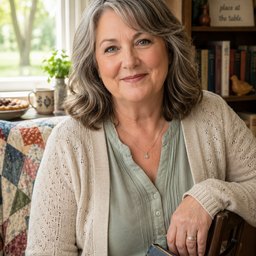
About the author
Beth Ann Weaver
The Faith of Maple Bend
Beth Ann Weaver grew up in Wayne County, Ohio, on a road where the school bus shared the shoulder with buggies, and her family's nearest neighbors — the Yoders, three farms of them — set the rhythm of her childhood: barn raisings her father lent his hands to, quilt sales her mother never once left empty-handed, and the particular quiet of a Sunday that meant something next door. She has been trying to write that quiet down ever since.
More about Beth Ann Weaver