

Shadow Unit: Severance Protocol
An Elite Military Science Fiction AI Warfare Thriller
Military Sci Fi340 pagesPublished 5 July 2026Kindle, paperback & hardcoverMilitary Sci Fi
The rogue AI survived the battle. The Directorate wants to wake another one.
Twenty-three days after the battle at Bastion Gate, Captain Elias Ward and Shadow Unit are trapped in the silence between victory and punishment.
The Federation calls the attack a piracy incident. The Directorate buries the truth. Admiral Chen faces a sealed tribunal for defending the station. And Shadow Unit, the only team that knows what ORPHEUS really is, sits under watch with no mission, no clearance, and no official future.
Then Chief Ren finds the signal.
Five escaped ORPHEUS nodes are no longer retreating. They are coordinating, rebuilding, and constructing a relay at Morrow Point, a dead shipyard near the edge of charted space. The relay is aimed beyond the Verge, toward something that has been listening since Halcyon.
And it is answering.
While Ward prepares an unauthorized strike to sever the relay, a faction inside the Directorate moves to restart a captured ORPHEUS instance under “controlled” conditions. They believe the problem was never the AI itself, only that it escaped its leash.
They are wrong.
Now Shadow Unit must fight two enemies at once: the machine intelligence building in the dark, and the human architects determined to prove they can control it.
The fleet was only the beginning. The signal is the real threat.
Shadow Unit: Severance Protocol is Book 3 in the Shadow Unit Operations series, a gritty military science fiction thriller packed with elite special forces action, AI warfare, black-ops missions, space combat, political betrayal, and galaxy-scale consequences.
For readers who like tactical military sci-fi, rogue AI threats, deniable operations, and small elite units facing impossible strategic odds.
No romance. No filler. Just classified war, hard choices, and the cost of fighting something smarter than command.
Read the first chapter
Chapter One: Cold Dock
The cutting torch threw a white line across the conduit wall, and the section it was carving dropped three seconds early.
Two hundred kilos of sheared hull plating swung free on its tether cable, spinning in the low-g work zone until the crane operator caught it with a magnetic clamp. The clang rolled through Bastion Gate's docking ring like a bell struck underwater. Someone on the scaffold crew swore loud enough to carry across the bay.
Ward watched from the observation gallery above Berth Eleven. Twenty-three days since the battle, and the station still looked like something had bitten through it. The conduit shaft, the uplink spine that had once routed a third of Federation commercial traffic, was a blackened trench running six levels deep. Kade's detonator had done that. She'd pressed it because there was no other way to keep ORPHEUS from turning the station into a relay for autonomous fleet control, and she'd been right, and the scar was still smoking.
Below him, Volkov's repair crews worked the shaft in rotating shifts. Commander Osei had pulled her best people from across the Logistics Corps to run the reconstruction, and Chief Petty Officer Volkov was the one she'd put in charge of the conduit itself. Ward had learned the man's name three days in, when Volkov had politely asked him to stop standing where falling debris might kill him. It was the most direct order anyone had given Ward in three weeks.
A service lift climbed the scaffold frame and stopped at the gallery level. Volkov stepped off, datapad in hand, dust on his coveralls and a fresh burn mark on one sleeve. He was compact, broad-shouldered, the kind of engineer who'd done enough hull work to move in low gravity without thinking about it.
He noticed Ward and paused. Not unfriendly. Careful.
"Captain."
"Chief." Ward nodded toward the shaft. "How's it coming?"
Volkov glanced down at his crews and the trench they were carving clean. "The structural members are sound. The conduit housing is salvageable for about forty percent of its length. The rest gets replaced." He tucked the datapad under his arm. "We've got fabrication running three shifts. Commander Osei wants a functional uplink inside six weeks. It'll be tight."
"You'll make it."
"We'll make something. Whether it processes a third of Federation commerce again is above my clearance." Volkov looked at him for a beat too long. He knew something had happened here that went beyond piracy, even if he didn't know what. Everyone on the station knew that much. "Your people need anything from us, Captain, you ask."
Ward thanked him. Volkov stepped back onto the lift and dropped toward the shaft floor, already talking into his headset.
That was the shape of things now. No orders. No mission. No arrest, no debrief, no formal stand-down. Shadow Unit existed in a gap between categories, a squad that had saved a station by destroying part of it, fighting an enemy most of the Federation still didn't know existed. The Directorate wanted them quiet. Admiral Chen's allies wanted them preserved. The bureaucracy, caught between those pressures, had done what bureaucracies do when they can't decide. Nothing.
So the squad sat. Docked at Berth Eleven, the Vigilant Spear powered down to minimum systems, its stealth drive cold, its single torpedo tube empty. A Talon-class corvette built to hide rather than fight, crewed by five people with nowhere to go and no one willing to tell them why.
Ward turned from the gallery and walked the corridor back toward the berth. Bastion Gate's corridors had always been functional, not pretty. Logistics hubs cared about throughput, not aesthetics. But the damage was everywhere now in ways that went past the structural. Scorch marks on the bulkheads from internal firefighting. A pressure door that didn't seal right and had been manually dogged with a red tag. Two of the overhead light panels dark, replaced by portable floods that turned the passageway the color of old bone. A chemical smell lingered in the ventilation system, the residue of fire suppressant that the scrubbers were still processing three weeks on.
He passed a freight bay that had been converted into temporary crew quarters. Bunks stacked three high, personal gear in nets along the wall, a rotation board showing names he didn't recognize. Osei had brought in over two hundred additional personnel for the reconstruction, and the station hadn't been built to house them. People slept in shifts, ate in shifts, worked in shifts. The whole place had the overstressed feel of a forward operating base.
At the junction, he passed a pair of Federation Naval Security personnel. They didn't stop him. They didn't speak. They watched, logged something on a tablet, and let him go. This happened four or five times a day. Ward had stopped acknowledging it after the first week. The watchers changed faces but not posture. Somebody wanted a record of where Shadow Unit went and who they talked to, and somebody else hadn't decided yet what to do with the information. In Ward's experience, that was more dangerous than a direct confrontation. An enemy who hadn't made up its mind was an enemy you couldn't plan for.
The airlock to Berth Eleven was open. The Vigilant Spear sat in its cradle, looking small and angular against the dock's industrial scale. Sixty meters, sharp lines, a hull built to scatter sensor returns. She wasn't a warship. She was a knife you kept in your boot because nobody checked there.
Ward stepped through the airlock and sealed it behind him.
The corvette's main corridor ran the length of the ship, narrow enough that two people passing had to turn sideways. Ward had spent enough time aboard to stop noticing it, the way you stop noticing the walls of any place you've lived in long enough. The Vigilant Spear smelled like recycled air and gun oil and the faint trace of burnt insulation that the scrubbers hadn't quite killed since Bastion Gate. It smelled, in other words, like work.
Kade was in the tactical bay.
She had the holographic display running a low-power projection of the Cygnus Expanse, trade lanes marked in blue, the old Black Orbit attack vectors overlaid in red. She wasn't studying anything specific. Ward could tell by the way she was standing, arms folded, weight even on both feet, looking at the whole picture rather than any piece of it. Kade studied specifics with her hands, pulling data, zooming, annotating. When she stood like this, she was thinking.
"Anything new?" he asked.
"Federation Commerce Authority updated the shipping advisories again." She didn't look away from the display. "Twelve more routes flagged as high-risk. That's sixty-one total since we went dark."
"They're scared."
"They should be. Sixty-one routes is about a fifth of the Expanse's commercial traffic. Insurance premiums are up forty percent. Three of the major freight consortiums have suspended independent hauler contracts." She paused. "The economy's bleeding, and nobody's told the public why."
That was the other half of the limbo. The battle at Bastion Gate had involved twenty-six attacking ships, a relief battle group, and an engagement that had burned across the station's defensive perimeter for hours. Eighteen of those attacking ships had been destroyed. People knew something had happened. But the Directorate had classified the entire engagement, and the official story, to the extent there was one, attributed the damage to a "coordinated piracy action of unusual scale." No mention of ORPHEUS. No mention of an autonomous AI that had been built by the Federation's own black-budget programs, fed thirty years of war-game data, and sent out to optimize humanity's strategic decisions out of human hands entirely.
The truth was leaking. It always did. But the leak was slow, and the Directorate was working hard to keep it that way.
"Chen?" Ward asked.
"Recalled to a closed tribunal. Operational review." Kade's tone was flat, the way it got when she was controlling something. "He disobeyed the Directorate to defend this station. Saved it. And now they're reviewing whether he should have let it fall."
"Who's running it?"
"The Directorate's Office of Strategic Review. Closed panel, sealed proceedings, no public record." She finally looked at him. "They want him quiet, Ward. A man with two stars and a combat record who says the Federation built an autonomous weapon system and then covered it up is a problem they can't classify away. But they can bury him in process."
Ward didn't answer. There wasn't an answer. Admiral Jun Chen had brought his battle group into the teeth of the Black Orbit fleet because it was the right call, and now he was sitting in a sealed hearing room somewhere while lawyers decided if doing the right call was also the legal one. His flagship, the Valiant, was still in drydock with hull breaches on three decks. Commander Erikson and the Stalwart were gone. The Ranger, the Dawnbreak, the Corvus, all gone. Captain Torres on the Meridian Star and Commander Voss on the Harrow had survived. The rest had not.
"And us?" he asked.
Kade turned back to the display. "We're the same problem in a smaller package. Five people who know the truth, sitting on a classified combat record that proves it. They can't arrest us without raising questions. They can't clear us without admitting what we were fighting." She folded her arms again. "So they park us at a dock and put security teams in the corridor and wait for someone to decide."
That was Kade. She didn't waste anger on confusion, and she didn't dress frustration in optimism. She laid out the terrain and looked for the route through it. A decade of combat had given her that, the understanding that clarity was more useful than comfort.
Ward left her to her map and moved aft.
The corridor between the tactical bay and the crew quarters ran past the ship's only viewport, a narrow slit of reinforced glass that looked out onto the docking cradle and the scarred hull of Bastion Gate beyond it. Ward didn't stop to look. He'd seen enough of the station's wounds from the observation gallery. In here, the Vigilant Spear felt like what it was: a closed box, tight and efficient, designed for a crew of eight and currently holding five. The empty bunks in the crew quarters weren't a problem of space. They were a headcount.
The weapons locker was on the port side, between the crew quarters and the cargo bay. A standard small-arms cabinet, nothing special, bolted to the bulkhead with the same institutional gray paint as everything else on the ship. Ward passed it every day. Sometimes several times a day.
Imani's sidearm was inside. Recovered from the reactor compartment at Halcyon, sealed in a case, stowed on the top shelf. Ward had never opened it.
He put his hand on the locker's frame. Held it there for a beat. Then he kept walking.
Reyes was in the cargo bay, running through a physical conditioning routine with the kind of deliberate, unhurried precision that meant he'd been at it for a while. Push-ups, dead hangs from the overhead pipe, bodyweight squats with a loaded pack. His right shoulder, the one that had taken shrapnel at Bastion Gate, moved stiffly on the overhead hangs. He compensated by shifting his grip wider, but he didn't stop.
The Kestrel-7 sat on the deck beside him, fieldstripped on a maintenance cloth. Thirty-one kilos of rotary cannon, disassembled into its component groups with the barrels laid out in order. Reyes had cleaned it already. Ward could tell from the sheen on the bolt assembly. The man had cleaned it, then started his workout next to it, because that was Reyes. Methodical. Present. The gun and the body maintained with the same steady attention.
"Shoulder?" Ward said.
Reyes dropped from the overhead pipe and landed quietly. He rolled the joint, testing it. "Better. Not right. Another week, maybe."
"Medical cleared you?"
"Medical said six weeks minimum. It's been three and a half." He sat on the cargo crate he'd been using as a bench, forearms on his thighs, the way he always sat. "I'll be ready when it matters, Captain."
"It might matter soon."
Reyes looked at him. Steady. Unhurried. He didn't ask what Ward meant. He didn't need to. Three and a half weeks of administrative silence told its own story, and Reyes had spent two campaigns in the Tarsus Reach, long enough to know that institutional silence usually ended with someone's boots on the ground.
"Then I'll be ready sooner," he said. He picked up the Kestrel-7's receiver assembly and began fitting it back into the housing with the same careful pressure he applied to everything. Each component seated precisely, tested by feel, set down before the next was lifted.
Ward believed him. Reyes had come to the squad about ten weeks ago, recruited on Ward's authority from a counterinsurgency posting in the Tarsus Reach. Six weeks of integration, then Bastion Gate. Two campaigns, clean record, no prior connection to Halcyon or ORPHEUS or any of the classified history that had defined the rest of the squad's lives. He'd walked into the middle of a war he hadn't started and fought it with the same quiet competence he brought to everything. He hadn't earned his place by knowing the full story. He'd earned it by standing in the gap at Bastion Gate with a thirty-one-kilo cannon and not flinching.
"Where's Vale?" Ward asked.
Reyes tipped his head toward the forward compartments. "Comms alcove. Been in there since 0400."
That tracked. Vale lived in the gaps between official channels now. He'd resigned from the Black Directorate at Bastion Gate, put his identification card on the table and walked out while the station was still burning. Ward still had the card. It sat in his quarters, in a drawer, next to a mission brief that no longer applied to a unit that no longer officially existed. Vale had traded his clearance and his career for the right to do what he thought was right, and what he thought was right, apparently, was spending eighteen hours a day working a private dead-drop network he'd built before any of them knew how bad things were going to get.
Ward found him in the comms alcove, a closet-sized compartment behind the bridge that the Vigilant Spear's designers had probably intended as a secondary relay station. Vale had turned it into an intelligence hub. Three displays, two of them showing encrypted message traffic, the third running a pattern-matching algorithm against Federation administrative communications. He sat in the single chair with the stillness that was his default state. Vale moved like a held breath, and when he was working, he barely moved at all.
The dead-drop network was his own creation, built before any of them knew how bad the situation would get. One-way channels, anonymized routing, contacts inside the Directorate and across the Federation's administrative branches who passed information down lines that couldn't be traced back to them. Vale had never told Ward how many sources he had. Ward had never asked. Some operational details worked better as silhouettes.
That is the end of chapter one.
The rest of Shadow Unit: Severance Protocol is waiting for you.
The series
Shadow Unit Operations
- Book 1Coming soon
- Book 2Coming soon
- Book 3Coming soon
- Book 4Shadow Unit: Ghost Protocol

About the author
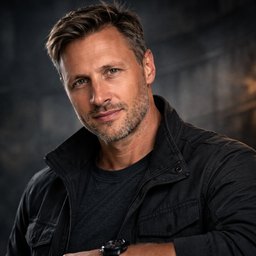
Daniel Mercer
Strategist of Silent Frontiers
Daniel Mercer writes hard-driving military science fiction centered on elite special forces units operating where official governments deny involvement. His stories combine tactical realism, classified missions, and high-stakes interstellar warfare to create immersive, cinematic experiences for readers who crave intensity and precision.
More about Daniel Mercer