

7 Steps to Become a Lifelong Learner
Never Stop Growing and Evolving
Success Habits182 pagesPublished 30 August 2025Kindle, paperback & hardcoverSuccess Habits
The world isn’t slowing down, and neither should you.
In a time when skills expire faster than smartphones and yesterday’s knowledge becomes tomorrow’s liability, there’s one edge that never fades: the ability to learn continuously and intentionally.
In 7 Steps to Become a Lifelong Learner, high-performance coach and behavioural science expert Jaxon Hunter gives you a battle-tested, zero-fluff roadmap to reignite your curiosity, upgrade your mindset, and build a personal learning system that lasts a lifetime.
This isn’t about chasing certificates or binge-watching motivational videos. It’s about rewiring how you think, grow, and adapt, every single day.
Inside this powerful, straight-talking guide, you’ll learn how to:
- Build a daily learning identity rooted in growth, not ego
- Set bold learning goals that fuel real progress
- Create sustainable learning routines (even with a full schedule)
- Curate high-impact input sources and ditch the mental junk
- Turn information into mastery through real-world application
- Join communities that accelerate your growth
- Track your evolution and never lose momentum again
Whether you’re a driven professional, an entrepreneur, or someone tired of stagnating, this book hands you the mindset, tools, and strategies to stay relevant, sharp, and dangerously capable, for life.
Learning isn’t school. It’s survival.
And the ones who never stop evolving? They win.
Read the first chapter
Chapter One: Learning Is the New Competitive Advantage
The world’s changing too fast for static knowledge.
L
et me give it to you straight: if you're relying on what you learned five years ago, even five months ago, you’re already behind.
We’re living in a world that doesn’t wait. Technology’s evolving faster than your morning coffee cools. Industries are disrupted overnight. Jobs vanish. Entire business models get bulldozed before you’ve even heard of them. In a world moving at the speed of now, your only real edge, the one thing that keeps you sharp, relevant, and ahead, is the ability to learn.
Not once. Not sometimes. Continuously.
And if that sentence makes you uncomfortable, good. It should. Comfort is the first sign of complacency. And complacency is the kiss of death in today’s world.
Static Knowledge Is a Liability
Think about this: most people stop actively learning the moment they leave school. They mentally clock out and coast. They go to work, do what they know, and hope the world stays still long enough for their knowledge to keep paying the bills.
It won’t.
Relying on what you already know is like fighting today’s battle with yesterday’s weapons. You might survive for a while. But eventually, someone sharper, faster, and more curious will eat your lunch.
This isn’t just a motivational pep talk, it’s neuroscience, it’s behavioral science, and it’s survival.
Carol Dweck’s research on the growth mindset proved it years ago: people who believe they can develop their abilities through effort and learning outperform those who think talent is fixed. Not sometimes. Always. Across education, business, sports, you name it.
What does that tell you? That your intelligence, your talent, your edge… it’s not set in stone. It’s elastic. But only if you stretch it.
The Top Performers Aren’t the Smartest , They’re the Most Adaptable
Let’s break a myth right now. You don’t need to be a genius to be a lifelong learner. You don’t need a high IQ, a fancy degree, or a photographic memory.
You need hunger. You need humility. You need to drop your ego and pick up a book, a podcast, a mentor, whatever gives you new input. Lifelong learners aren’t better than you. They just decided not to settle.
And they’re winning because of it.
Look at any high-performer in business, sport, or creativity. Elon Musk taught himself rocket science by reading and asking questions. Serena Williams reinvented her game more times than her rivals could handle. Tim Ferriss constantly experiments, consumes knowledge, and tweaks everything. It’s not magic. It’s mindset.
These people treat learning like oxygen. You should too.
Formal Education Ends. Real Learning Doesn’t.
Here’s another truth you probably weren’t taught: school might’ve taught you facts, but it didn’t teach you how to keep learning for life.
And let’s be honest, school often killed curiosity more than it fuelled it. You were graded, ranked, and filtered. You were taught to memorise, not to question. To follow instructions, not to follow your curiosity.
That ends now.
Lifelong learners ditch the “classroom mindset.” They realise education wasn’t the finish line, it was the warm-up.
You don’t need to enrol in a degree program to grow. You don’t need permission. You need a system, a strategy, and a hunger to evolve.
You need to make learning who you are, not just something you occasionally do.
Because in today’s world, those who evolve survive. Those who don’t? They become obsolete.
The New Rules of the Game
Let me hit you with the facts:
The average skill lifespan is under 5 years.
AI and automation will replace millions of knowledge jobs.
Information is doubling at a pace never seen before in human history.
You’ve got two choices.
Option 1: Fight to preserve what you already know, protect your comfort zone, and watch the world outpace you.
Option 2: Become a learner. Stay agile. Treat your brain like a muscle that needs daily reps.
Choose wisely.
And let’s be clear: this book isn’t just about becoming a reader. This isn’t about becoming a trivia master. This is about becoming adaptable. Curious. Resilient. Forward-moving. This is about staying mentally and emotionally equipped to handle whatever life throws at you.
Because life doesn’t hand you success for what you did. It rewards you for what you’re becoming.
Why Lifelong Learners Thrive Where Others Don’t
Let’s make it practical. Here’s why lifelong learners outperform and outlast the rest:
1. They Pivot, Not Panic
When things change, and they always do, lifelong learners don’t freeze. They pivot. When their job gets automated, they learn new skills. When the market shifts, they adapt. They don’t see change as a threat, they see it as a classroom.
2. They Stay Energized, Not Drained
Learning isn’t a drain on energy, it’s a source of it. When you’re actively learning, your brain releases dopamine. That’s the same chemical behind motivation and drive. People who are learning feel more alive because they are more alive.
3. They Compound Knowledge Like Wealth
Learning is like compounding interest. Small gains over time = exponential results. Read 10 pages a day, learn one new thing a day, and in a year, your thinking is unrecognisable. Your conversations are deeper. Your decisions are sharper.
4. They Stay Relevant, Not Replaceable
When your skills go stale, so does your value. Lifelong learners never allow that to happen. They’re always levelling up. They stay in demand because they’re not stuck in yesterday.
5. They Build Confidence, Not Complacency
Confidence isn’t built by pretending you know everything. It’s built by proving to yourself you can figure anything out. Lifelong learners trust themselves to adapt, because they’ve made a habit of doing it.
The Cost of Not Learning? Obsolescence.
Let’s talk consequences. You can’t afford to ignore this.
In today’s world:
If you don’t evolve, your job will.
If you don’t stretch your mind, it shrinks.
If you don’t stay curious, you’ll grow bitter.
If you don’t grow, you’ll rust.
You’ll become the person who always used to be sharp. Used to be relevant. Used to be confident. You’ll have stories about how things were, but no edge in how things are.
Is that who you want to be?
No. You’re here reading this because you know there’s more in you. You know you’ve got another gear. You’re hungry, even if the world around you has gone soft.
Good. That hunger is your spark. Learning is how you fan it into fire.
From Scarcity to Growth: The Mindset Shift That Changes Everything
Most people operate with a scarcity mindset around learning.
“I’m too old.”
“I don’t have time.”
“I wasn’t good at school.”
“I don’t know where to start.”
Let me destroy those excuses right now.
You’re not too old. Neuroplasticity doesn’t shut off. Your brain can rewire until the day you die, if you use it.
You do have time. You just waste it scrolling, bingeing, procrastinating. Start with 10 minutes. No excuses.
You weren’t bad at school, you were bad at sitting still for boring information. Lifelong learning is different. It’s on your terms.
You don’t need to know where to start. You just need to start. Learn messy. Learn imperfect. Learn publicly. But learn.
You’re not broken. You’re under-stimulated. Learning fixes that.
ACTION STEP: Make the Decision
Right now, before we go any further, I want you to do something.
Declare this out loud:
“I am a lifelong learner. I evolve. I grow. I adapt. That’s who I am now.”
Say it like you mean it. Not like a cute affirmation. Like a mission. Because it is.
This isn’t a season. It’s not a phase. It’s a shift in identity.
You are not here to preserve what you were. You are here to build who you’re becoming.
And if that fires you up, good. We’re just getting started.
Your Takeaway
Evolve or Become Obsolete
In a world that never stops changing, learning is no longer optional. It’s your edge. It’s your armor. It’s your competitive advantage.
You don’t need to be the smartest. You don’t need to be the most talented. You just need to be relentless about growth.
So here’s your choice:
Evolve, or become obsolete.
Start today. Learn something. Anything. Read a page. Watch a tutorial. Ask a question. Write an idea down.
Don’t wait for permission.
You’re a learner now.
Act like it.
The Neuroscience of Continuous Learning
Your brain isn’t a hard drive with a fixed capacity. It’s a living, breathing organ that physically reshapes itself every time you learn something new. Neuroscientists call this neuroplasticity, and it’s the biological proof that lifelong learning isn’t just motivational talk. It’s how your brain was designed to operate.
When you learn a new skill or absorb new information, your neurons forge new connections. They literally build new pathways. The more you repeat and reinforce that learning, the stronger those pathways become. Think of it like walking through a field of tall grass. The first time, you’re cutting through underbrush. But the tenth time? There’s a clear trail.
Dr. Michael Merzenich, one of the pioneers of neuroplasticity research, proved that the brain can reorganise itself at any age. His work showed that targeted, consistent mental stimulation doesn’t just maintain cognitive function. It actually improves it. Your brain gets sharper the more you challenge it.
This means every book you read, every conversation you have, every new idea you wrestle with is physically upgrading your hardware. You’re not just “staying current.” You’re building a better brain.
The flip side is equally true. When you stop learning, those pathways weaken. The brain starts pruning connections it considers unnecessary. Cognitive abilities decline, not because of age, but because of disuse. “Use it or lose it” isn’t a cliché. It’s neuroscience.
So every time you choose Netflix over a book, every time you scroll instead of study, every time you coast instead of challenge yourself, your brain is getting the message: this person doesn’t need to grow anymore. And it starts shutting down the machinery of learning.
That should scare you. But it should also excite you. Because it means the power to keep growing, to keep sharpening, to keep evolving, is entirely in your hands. Your brain is ready. The question is whether you are.
That is the end of chapter one.
The rest of 7 Steps to Become a Lifelong Learner is waiting for you.

Or take the whole collection
The Success Habits Collection
Habits that survive shift work, small children, travel and the days you have nothing left. Fifteen books, each naming the obstacle it solves.
Get the collection, $39.99Jaxon Hunter · 15 books · instant download, read on any device
The series
The Success Habits Series
- Book 1How to Build Habits That Stick

- Book 2The 7 Daily Habits of High Performers

- Book 3How to Create a Powerful Morning Routine

- Book 4How to Break Bad Habits Once and For All

- Book 57 Steps to Develop Consistency and Discipline

- Book 6How to Develop a Daily Reading Habit

- Book 7How to Form New Habits Without Relying on Willpower

- Book 8How to Practice Daily Gratitude for a Success Mindset

- Book 9How to Start a Daily Journaling Habit

- Book 107 Steps to Become a Lifelong LearnerYou are here

- Book 11How to Make Exercise a Daily Habit

- Book 12How to Change Your Life One Habit at a Time

- Book 13How to Use Daily Affirmations to Achieve Your Goals

- Book 14How to Start a Daily Meditation Habit (Even If You Can’t Sit Still)

- Book 1510 Secrets to Make Success a Habit

- Book 16The Habit Architecture

About the author
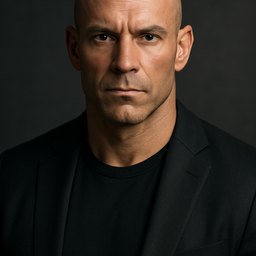
Jaxon Hunter
Success Habit Mentor
Jaxon Hunter is not your typical self-help author.
More about Jaxon Hunter