

False Witness
A Legal Thriller About a Fabricated 911 Call, False Testimony, and Courtroom Conspiracy
Legal Thrillers306 pagesPublished 12 July 2026Kindle, paperback & hardcoverLegal Thrillers
A dying man’s voice names his killer. But what if the voice was never real?
Former prosecutor Sofia Marchetti now runs a struggling defense practice, taking small cases and carrying the guilt of one conviction she still cannot forget. Then a public defender asks her to take a murder case no one wants.
Renata Osei, a home health aide, is accused of killing her elderly patient, Arthur Fielding. The evidence looks impossible to beat: a 911 call from Fielding’s landline, two neighbors who saw Renata leaving the house, and a medical examiner’s ruling that seems to confirm the state’s theory.
But Sofia hears something wrong in the recording.
The voice is too calm. The room behind it is too empty. The dying man uses a name he never used in life.
As Sofia digs deeper, the case begins to come apart. The witnesses sound scripted. The discovery file is too clean. A redacted invoice points to a shadowy litigation-support vendor with no real footprint. And when Sofia challenges the 911 recording, the pressure turns personal: anonymous warnings, a disciplinary complaint from her past, and a threat that reaches all the way to her younger brother.
To save Renata, Sofia must prove the state’s most powerful evidence was manufactured. But the closer she gets to the truth, the clearer it becomes that this is not one bad case.
It is a system.
False Witness is a high-stakes legal thriller about fabricated evidence, synthetic voice technology, false testimony, and the defense attorney willing to risk everything to expose a courtroom conspiracy.
Perfect for fans of intelligent courtroom suspense, defense attorney thrillers, and legal thrillers where the evidence itself is on trial.
Read the first chapter
Chapter One: The File She Keeps
The radiator in Sofia Marchetti's office had two settings: nothing and too much. Tonight it was too much. The baseboards ticked and hissed while February pressed against the windows of the Brewer's Hill walkup she'd converted into a law practice three years ago, back when the rent was low enough to justify the plumbing. She'd since replaced the toilet, patched the ceiling where a pipe burst during her first winter, and learned to keep a space heater under her desk for the weeks the radiator chose nothing. The sign on the door still read MARCHETTI LAW in vinyl letters she'd applied herself, one of them starting to peel.
She saved the Delgado brief, closed her laptop, and sat for a beat in the quiet.
The building had been a duplex in a previous life. Her office occupied what was once the living room. The conference room, a card table and four mismatched chairs, sat in the old kitchen. A narrow hallway led to a second room she used for storage and, on the nights she worked too late, a couch that smelled faintly of the previous tenant's cat. She'd tried everything to kill the smell. Baking soda, enzyme spray, a candle Leo bought her that was supposed to be cedar but mostly smelled like a department store.
The Delgado case was a DUI, her bread and butter, a straightforward suppression motion she could draft in her sleep. She had three active files. Delgado. A shoplifting charge for a teenager whose mother paid in installments of forty dollars. And a landlord-tenant dispute she probably shouldn't have taken but did because the tenant was seventy-one and had nowhere else to go.
This was not the career she'd planned when she graduated from Marquette Law nine years ago, top fifteen percent of her class, a clerkship offer she turned down because the Milwaukee County District Attorney's office recruited her first. Five years she gave them. Five years of felony prosecutions, grand jury presentations, closing arguments in courtrooms where the fluorescent lights buzzed at a frequency that still lived somewhere behind her molars. She'd been good at it. That was the part she couldn't reconcile.
She pulled open the bottom left drawer of her desk.
The transcript sat where it always sat, under a yellow legal pad and a box of binder clips she never used. State of Wisconsin v. Terrence Deshawn Graves. Case number 2020-CF-004417. She didn't need to open it. She'd read it enough times that certain passages had worn smooth in her memory the way a river stone loses its edges. Page 212, where Detective Pruski described the eyewitness identification procedure he'd used. Page 340, where she herself stood in front of twelve jurors and told them the evidence was overwhelming.
It had been overwhelming. Two eyewitnesses placed Terrence Graves at the scene of a gas station robbery where the clerk was beaten badly enough to lose hearing in his left ear. A partial palm print on the counter matched Graves. He had a prior for simple assault, a bar fight two years earlier, and the jury saw a pattern she'd encouraged them to see.
Guilty on all counts. Graves was twenty-three. He got fourteen years.
Sofia left the DA's office eight months later.
She didn't leave because of Graves, not exactly. She left because she couldn't stop looking at it, couldn't stop turning the case over in the hours after work, and the unease ate at her until the office didn't fit anymore. The specific proof came later. One of the eyewitnesses, Pamela Brandt, had given a description the night of the robbery that didn't match Graves at all. Five foot eight, medium build, light-skinned. Graves was six two, heavyset, dark-complexioned. Not close. Not a nervous witness rounding off details under stress. A fundamentally different person. The description changed between the initial report and the formal statement taken three days later, after a photo array that Pruski administered without recording. The revised description matched Graves perfectly. The original read like a stranger.
Sofia found this fourteen months after the conviction, on a night like this one, sitting at this desk in the cold. She'd pulled the police reports from a colleague still at the office, a favor that cost a bottle of Maker's Mark and the understanding that she wouldn't ask again. The original description was in Pruski's handwriting on a supplemental report that had never made it into the discovery production Sofia relied on when she was lead prosecutor.
She hadn't hidden it. She was fairly sure of that. But she hadn't found it, and finding it was her job.
The transcript's cover page carried a coffee stain in the upper right corner, a brown ring she'd made during one of those late nights when she was still trying to decide if what she'd found meant what she thought it meant. She'd gone to her supervisor, Paul Ostrowski, and laid it all out. The mismatched description. The unrecorded photo array. The gap in discovery. Paul listened with his hands folded on his desk and told her that trial counsel's responsibilities ended at the verdict. That the defense had its own investigators. That every conviction looked different from the other side.
She filed a memo. It went into a folder, and the folder went into a cabinet, and nothing came back out. She asked Paul about it twice. The first time he said it was under review. The second time he said he'd look into it. His tone made clear that looking into it meant letting it sit until she stopped asking.
Six weeks later she cleaned out her desk and put her name on a walkup in Brewer's Hill, and the Graves transcript came with her. It sat in this drawer like a tooth she couldn't stop pressing her tongue against, tender and familiar and going nowhere.
She closed the drawer.
H
er phone buzzed. Leo.
You coming home or should I just eat cereal
She checked the time. Six forty. She'd told him she'd be home by six.
Leftover chili in the fridge. Heat it on the stove not the microwave. Home in 20.
Too late already microwaving it
Leo.
It's fine Sofia it's chili not a soufflé
He called her Sofia when he wanted to sound older than fifteen. She let him, mostly. Their mother had died three years ago, an aneurysm at fifty-two, no warning, no last conversation worth the name. Their father had been gone long before that, a man Sofia remembered mostly as a coat on the back of a chair and then, one November, not even that. She'd been twenty when he left. Leo was eight. When their mother died, Leo was twelve and Sofia was the only family left, so she filed the guardianship papers and cleared out the second bedroom of her apartment and became, overnight, something she had no training for.
She was still figuring it out. Leo would say she was overthinking it, which was probably true, but she'd also spent five years prosecuting cases where someone's failure to pay attention ruined a life, and that vigilance had settled into how she did everything. She checked on him too often. She kept the fridge stocked even when money was tight. She drove him to school when the temperature dropped below ten, which in Milwaukee meant most of January and February.
He was a sophomore at Riverside University High School, a smart kid who coasted on seventy-percent effort and still pulled Bs. He played JV basketball, not because he was tall (he wasn't, not yet) but because he was quick and didn't mind getting hit. He had their mother's face, round and open, the kind of face that made strangers trust him at the grocery store. He had their father's restlessness, too, and Sofia watched for it the way you watch a sky that might turn. So far it showed up as curiosity, not escape. She told herself that was enough. Most nights she believed it.
She locked the office, tested the deadbolt twice out of habit, and walked to her car. A ten-year-old Civic parked on the street because the building didn't have a lot. The engine turned over on the second try. She let it idle while she scraped the windshield with a credit card she kept in the glove box for exactly this purpose, her actual scraper having vanished into Leo's possession for reasons he described as "science."
The drive home took twelve minutes. East on North Avenue, south on Humboldt, past the old Schlitz brewery complex with its brick towers lit amber against the dark, past the taqueria where she and Leo ate on Friday nights when she wasn't working, past the corner lot where someone had been building a fence since October and never finished. Their apartment was the upper floor of a two-flat on a block where the houses pressed close together, narrow and tall, original wood siding under layers of paint that cracked in the cold. The porch light was on. Leo always turned it on when she was late, a habit he denied having.
She parked on the street, climbed the stairs, and opened the door to the smell of microwaved chili.
Leo was at the kitchen table with a textbook open and his phone propped against the salt shaker, watching something with the sound off.
"You didn't use the stove."
"I used thermal energy to heat food. The method is a detail."
She hung her coat on the hook by the door. The apartment was small but warm, two bedrooms, a bathroom with a shower that ran hot for exactly seven minutes, a kitchen that opened into a living room where the couch faced a TV they rarely turned on. Books stacked on the coffee table and the end tables and, when Leo ran out of room, on the floor beside his bed. He read constantly, mostly history, mostly about people who made catastrophic decisions. He said it was comforting to know that everyone, even kings, got things wrong.
"Did you eat?" he asked without looking up.
"I'll have some in a minute."
"There's like two bites left."
"Then I'll have two bites."
She sat across from him and pulled his textbook toward her. AP World History. The chapter on the Reformation. "Quiz tomorrow?"
"Thursday."
"So you're studying three days early."
"I'm reading. There's a difference." He picked up his phone, glanced at the screen, put it back down. "Mrs. Halloran assigns reading."
"And you do all of it."
"Some of us care about our education, Sofia."
He said it deadpan, flat and dry, and she almost smiled. Almost. He was all right. That was what she checked for every day, sometimes without realizing she was doing it: whether Leo was all right. Whether the loss had settled into him in ways she couldn't see. Their mother's death had hit him at twelve, an age when you're old enough to understand what happened and young enough that understanding doesn't help. He'd gone quiet for about six months. Not withdrawn exactly, just careful, like someone walking through a room where the furniture kept moving. Then he started talking again, mostly to Sofia, mostly in the kitchen, and the cadence of their evenings took shape. She worked late, came home, found him studying or pretending to study, and they talked about small things until the conversation found its own way to something real.
Tonight it didn't. He had reading to do. She heated the last of the chili, which was barely enough to fill a coffee mug, and ate standing at the counter while she scrolled through the day's emails. A motion deadline reminder. A billing notice for her Westlaw subscription she'd been meaning to downgrade. A newsletter from the Wisconsin Association of Criminal Defense Lawyers she'd skim later and forget.
And a voicemail notification, timestamped 4:47 p.m., from a 414 number she didn't recognize.
She pressed play and held the phone to her ear.
"Ms. Marchetti, this is Warren Goff, I'm a public defender with the Milwaukee County office." The voice was tired, the kind of tired that lived in the vowels. "I've got a case I'm trying to place with private counsel. Murder one, client is a home health aide named Renata Osei, charged with killing her patient, an elderly man in Wauwatosa. She's been in custody for three weeks. I'm carrying sixty-two active files right now and I can't give this one what it needs, and frankly nobody's lining up. It's not a case with a lot of public sympathy. The victim was wealthy, the client's not, and the state's got a 911 recording that's going to be hard to beat." A pause. The sound of a chair creaking. "I'm told you used to be with the DA's office and that you left on your own terms, which around here means something. I'm also told you take cases other people won't. If that's true, call me back. I'll send you the file."
The voicemail ended. Sofia put her phone on the counter and leaned against the edge of the sink.
Sixty-two active files. She knew what that looked like from the inside. When she was at the DA's office, the public defenders across the aisle carried caseloads like that and worse. She'd watched them shuffle through hearings with file folders they'd opened for the first time that morning, whispering to clients whose names they'd learned in the elevator. It wasn't laziness. It was math. Sixty-two files meant each client got roughly four hours a month, and four hours wasn't enough to return phone calls, let alone investigate a murder.
It meant Warren Goff was doing triage, not lawyering. It meant Renata Osei was going to get a plea offer and a ten-minute conversation about why she should take it, and if she was lucky, the conversation would happen in a room with a door instead of a hallway.
Murder one, a home health aide, and a 911 recording. That was a conviction machine. The jury would hear the dead man's voice naming his killer and everything after that would be background noise.
Leo looked up from his textbook. "Work stuff?"
"Maybe."
"You've got that look."
"What look."
"The one where you're about to do something that's going to keep you up at night." He turned a page. "Just so I know whether to leave the hall light on."
She poured a glass of water and drank half of it. Sixty-two active files. A client nobody wanted. A recording that would be hard to beat.
She'd been a prosecutor for five years. She knew what a clean case looked like, and she knew what a case looked like when someone had cleaned it. The difference was invisible to most people. It lived in the gaps, in the too-neat edges, in the absence of the mess that real evidence always carried. A real case had rough spots, contradictions, loose threads that didn't resolve. A case that had been cleaned was smooth. Everything fit. Nothing snagged.
That is the end of chapter one.
The rest of False Witness is waiting for you.
The series
The Edited Truth Series
- Book 1Objection: Edited

- Book 2The Juror Pattern

- Book 3False WitnessYou are here

- Book 4Chain of Custody

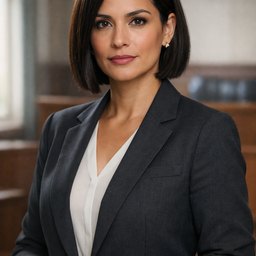
About the author
Tiffany Torres
Strategist of High-Stakes Justice
Tiffany Torres writes high-stakes legal thrillers where the truth is rarely what it seems and the courtroom is only the first battlefield.
More about Tiffany Torres