
7 Conspiracy Thriller Tropes Fans Can’t Get Enough Of (And Why They Work) May 12, 2026 – Posted in: Book Recommendations, Fiction, Thrillers – Tags: best conspiracy thrillers, book recommendations, conspiracy thriller, Silas Rykers, thriller books, thriller tropes
There’s something almost addictive about a great conspiracy thriller. You pick it up planning to read one chapter before bed, and four hours later you’re still going, heart hammering, half-convinced your neighbour might be in on it.
But what is it, exactly, that makes these books so impossible to put down? A lot of it comes down to the tropes — and not in a bad way. In conspiracy fiction, tropes aren’t lazy shortcuts. They’re the fuel. They’re why readers keep coming back, year after year, for more shadowy organisations and classified documents and protagonists who know too much.
Silas Rykers, Edenroot Press’s conspiracy thriller author, builds his fiction on exactly these pillars. Let’s break them down.
1. The Ordinary Person Who Stumbles Into Something Huge
Nobody builds a better hook than “regular person accidentally uncovers a terrifying secret.” The protagonist isn’t a special agent or a seasoned detective. They’re a journalist, a mid-level government analyst, maybe a librarian — someone who feels a lot like us. That ordinariness is what makes the discovery feel real.
When an everyday person finds themselves being followed by men in unmarked SUVs, you feel every spike of their panic. There’s no training to fall back on. No backup. Just their wits, a burner phone, and a growing conviction that nobody can be trusted.
This trope works because it pulls readers directly into the story. You don’t need to suspend much disbelief when the hero is just a person trying to stay alive.
2. The Cover-Up Goes Higher Than Anyone Imagined
The conspiracy starts small. A local politician. A shady pharmaceutical company. But then the hero pulls one more thread, and suddenly it leads to the top — the intelligence community, the entire financial system, the people who were supposed to be in charge of stopping exactly this kind of thing.
This escalation is almost a law of the genre, and for good reason: it keeps ratcheting up the stakes at exactly the right moments. Just when you think the hero might have a way out, the walls close in further.
The best conspiracy thrillers know how to pace this reveal. Too fast and it feels cheap. Too slow and readers check out. The sweet spot tends to land around the midpoint, when the protagonist is already too deep to walk away.
3. The Ally Who Might Be a Traitor
Trust is a resource in conspiracy fiction, and it runs out fast. The protagonist picks up allies along the way, but neither the reader nor the hero can ever be fully sure which ones are genuine. The friend from the FBI field office. The source who’s been feeding them information. The love interest who appeared at a suspiciously convenient moment.
This trope keeps readers on edge in a very specific way. It’s not just “will the hero survive?” — it’s “who around them is actually real?” That paranoia bleeds off the page. You find yourself reading differently, watching for inconsistencies, trying to work it out before the protagonist does.
When the betrayal lands, it hits hard precisely because you were almost convinced this one was safe.
4. The Shadowy Organisation Running Everything
Secret societies. Shadow governments. Ancient orders operating from behind the scenes of history. The shadowy organisation pulling strings is perhaps the most iconic conspiracy thriller trope of all.
What makes it so satisfying is the implication: that the world as we understand it is a façade. Behind every major event, there’s a group of powerful people who knew. It’s terrifying and, somehow, weirdly reassuring. At least someone has a plan.
This trope connects directly to what psychologists call “epistemic curiosity” — the human need to find patterns and hidden truths. Conspiracy fiction scratches that itch in the safest way possible: through a story you can always put down. (Even if you don’t.)
Browse the full Edenroot Press thriller collection — Silas Rykers sits alongside a roster that includes espionage, military action, and psychological suspense, all built on the same DNA of high-stakes secrets and impossible choices.
5. The Race Against Time (and Everyone Else)
Conspiracy thrillers rarely let their heroes pause for a breath. There’s almost always a deadline: the files get deleted in 48 hours, the whistleblower lands at midnight, the vote happens before dawn. Urgency is the engine of the genre.
It transforms what might otherwise be a purely intellectual puzzle into a full-body experience. Your pulse goes up. You flip pages faster. The book stops being something you’re reading and becomes something that’s happening to you.
Done well — and paired with a hero who makes real mistakes under pressure — this trope produces the kind of reading experience that’s genuinely hard to replicate in any other genre.
6. Redacted Documents and Hidden Evidence
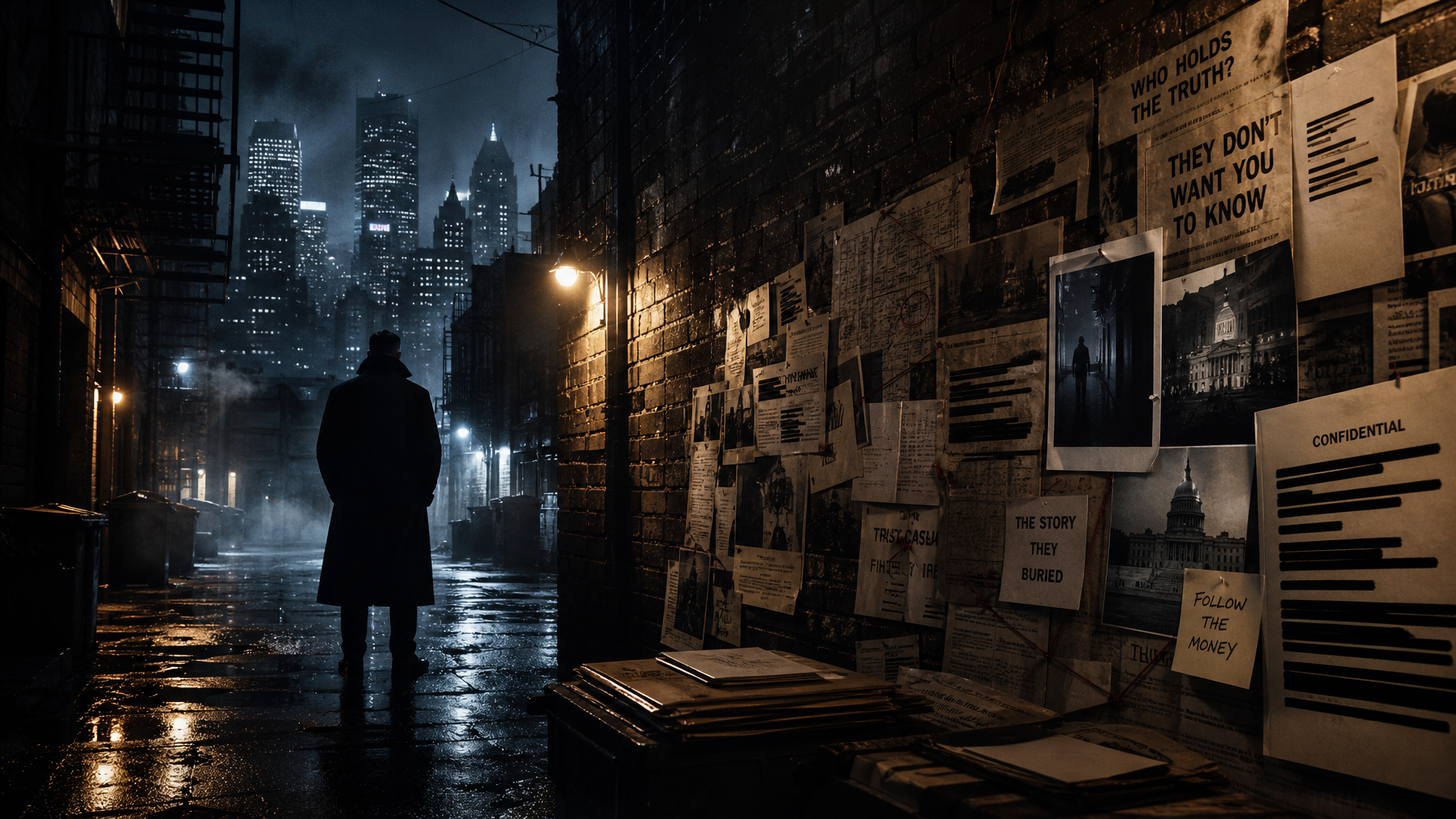
There’s something viscerally satisfying about a document stamped CLASSIFIED or a photograph with the key face obscured. The physical presence of hidden evidence in conspiracy fiction taps into something primal: the idea that the truth exists, written down somewhere, if only you could find it.
From newspaper clippings pinned to a corkboard to encrypted drives smuggled across borders, the evidence-hunting thread gives the genre a procedural quality that rewards careful readers. Pay close attention. The answer is always in there somewhere.
7. The Truth That Changes Everything — And Can’t Be Unsaid
Every great conspiracy thriller builds to a revelation. And the best ones make sure that revelation has real consequences. The truth can’t be put back in the box. It reshapes everything the reader — and the hero — thought they understood.
This is the emotional payoff that makes all the sleepless reading worth it. It’s not just about solving the mystery. It’s about what happens after the curtain gets pulled back. Does the hero go public? Do they survive? Does anyone believe them? The conspiracy thrillers that linger longest are the ones that sit with those questions instead of rushing to tie everything up neatly.
Why This Genre Feels More Relevant Than Ever
In a world where information moves at lightning speed and trust in institutions runs thin, conspiracy fiction hits differently. It gives readers a safe container for anxieties about power, secrecy, and who’s really calling the shots. It validates the feeling that things aren’t always as they seem — and then gives you a protagonist who pushes back.
That combination of paranoia, momentum, and moral purpose is genuinely hard to find anywhere else on a bookshelf.
Ready to Fall Down the Rabbit Hole?
If conspiracy thrillers are your reading obsession, you’re in the right place. Silas Rykers writes exactly the kind of fiction that keeps you questioning every page — the kind where the cover-up really does go all the way to the top.
Explore the full thriller range and more at edenrootpress.com.